AOC Q27G4ZDP Review – 4th-Gen WOLED Brings 1,500 Nits and 280Hz to the Sweet Spot
Affiliate disclosure: some links in our reviews may be affiliate links. If you buy through them we may earn a commission at no extra cost to you. Our verdicts are never influenced by partners.
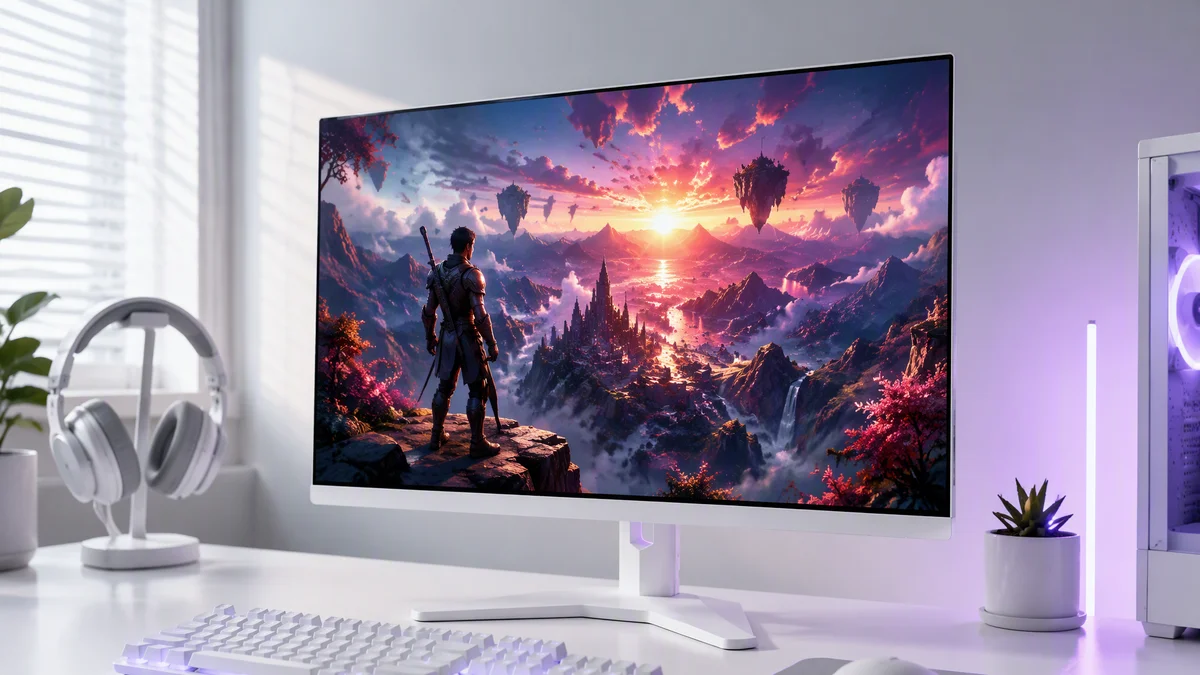
Ask a hundred PC gamers to name the ideal monitor spec and most will land on the same answer: 27 inches, 1440p, high refresh. The AOC Q27G4ZDP takes that sweet spot and bolts on the newest panel technology in the business: LG’s 4th-generation WOLED with a tandem stack, 280Hz of refresh, and HDR brightness that hits 1,500 nits. Oh, and it comes in white, which should not matter but absolutely does.
Key Takeaways
- One of the first monitors with LG’s 4th-generation Primary RGB Tandem WOLED panel.
- 280Hz at 2560×1440 with a quoted 0.03ms response time.
- HDR peak brightness up to 1,500 nits, a generational leap for WOLED.
- AGLR anti-glare coating and 99 percent DCI-P3 coverage in a striking white housing.
What 4th-gen WOLED actually improves
WOLED panels have always been brilliant at blacks and response time, with two honest weaknesses: brightness and a color structure that relied on a white subpixel. The 4th-generation panel attacks both. Its Primary RGB Tandem structure stacks light-emitting layers for higher luminance, pushing peak HDR output to a claimed 1,500 nits, a number that would have been fantasy for WOLED two years ago. Full-screen brightness, the figure that matters for desktop work and bright games, lands around 335 nits, rising to roughly 555 nits in mixed scenes.
The practical result is an OLED you can use in a bright room without apology. Pair that with the AGLR anti-glare, low-reflection coating, and the Q27G4ZDP holds its contrast under office lighting where older glossy OLEDs simply gave up. It is not quite the inky experience of a dark room, but the gap has never been smaller.
Specs at a glance
| Specification | AOC Q27G4ZDP/WS |
|---|---|
| Panel | 27-inch WOLED, LG 4th-gen Primary RGB Tandem |
| Resolution | 2560×1440 |
| Refresh rate | 280Hz |
| Response time | 0.03ms GTG |
| Brightness | About 335 nits full screen, up to 1,500 nits HDR peak |
| Color | 99 percent DCI-P3 coverage |
| Coating | AGLR anti-glare, low reflection |
| Housing | White finish, slim bezels |
Gaming performance
- 280Hz at 1440p is the practical ceiling of what current GPUs drive in competitive titles.
- Near-instant response time delivers motion clarity no LCD at this price can touch.
- HDR highlights in supported games genuinely pop at the panel’s elevated peak brightness.
- 1440p on 27 inches remains the pixel-density sweet spot for both work and play.
In play, the Q27G4ZDP is exactly what the specs promise: effortless. Competitive shooters at 280Hz feel immediate in a way that spoils you for anything slower, and the OLED response means there is no overshoot artifacting to trade for the speed. In HDR showcases, highlights like explosions and neon signage carry a punch that older WOLED panels could only hint at. A mid-range GPU drives esports titles at the refresh ceiling, while something from the class in our RTX 5070 Ti review keeps AAA games well into triple digits at these settings.
Living with it day to day
The 27-inch 1440p format has endured because it works: sharp enough that text looks clean at native scaling, small enough to see the whole screen without head movement, and light enough on the GPU that high refresh is achievable without a flagship card. The white housing is a genuine differentiator in a sea of black plastic; in a bright, minimal setup it looks intentional rather than gaming-adjacent. The stand is stable and height-adjustable, and the on-screen display is navigated by a proper joystick rather than a prayer.
Where it sits in the OLED boom
OLED monitor shipments have been growing at a staggering rate, and it is panels like this that explain why: the technology has fixed its weaknesses faster than prices have risen. The Q27G4ZDP undercuts the flagship 4K OLEDs significantly while conceding little that matters at this size. If you want the bigger, sharper, dual-mode experience, our ROG Swift PG32UCWM review covers the 4K end of the market. For everyone else, this 27-inch sweet spot is where the value lives, and AOC has just moved the fence posts.
The verdict
Text clarity and the workday test
WOLED’s unusual subpixel layout has historically produced a faint color fringe on small text, the one place LCD retained a clear win. The 4th-generation panel improves matters noticeably: at 1440p on 27 inches, with Windows ClearType tuned, text in documents and code editors is clean enough that we stopped noticing within a day. Pixel-peeping a spreadsheet will still reveal a whisper of fringing that a same-density LCD avoids, but in normal use it has crossed from objectionable to academic.
The on-screen display deserves a mention too: AOC’s menu system is logically organized, the joystick navigation is precise, and the gaming features, crosshairs, frame counter, shadow boost, are present without being intrusive. Firmware updates arrive over USB, a small sign of long-term support we appreciate.
Burn-in protection is handled by the now-standard suite of pixel refresh cycles, logo dimming and screen shift, all configurable in the menu. As with every OLED, we advise sensible habits, varied content and auto-hiding taskbars, but the durability data on modern panels has made the fear largely historical.
Regional specifications are on AOC’s official site.
The sweet spot, perfected
What we loved
- 4th-gen tandem WOLED brightness transforms HDR at this size
- 280Hz and instant response: competitive speed with cinematic contrast
- AGLR coating finally makes OLED work in bright rooms
- White housing looks fantastic in a clean setup
What needs work
- 1440p, not 4K, if pixel count is your obsession
- WOLED text fringing, while improved, is not fully extinct
- Availability varies by region
The AOC Q27G4ZDP is the monitor we will recommend most this year. It takes the format everyone actually buys, fixes the brightness problem that held OLED back, and prices the result for humans. The sweet spot has a new king. Our review methodology explains how we test.
Wondering if your GPU can drive 280Hz at 1440p? Ask the team and we will check your build.

Alex Mercer is the managing editor of Tech News Xplore. A hardware journalist for over a decade, he has benchmarked more CPUs, GPUs and handhelds than he can count, and leads the publication's testing methodology and editorial standards.
1 reader comment