Apple’s Mac mini M6 and Mac Studio M5 Ultra Are Now Available
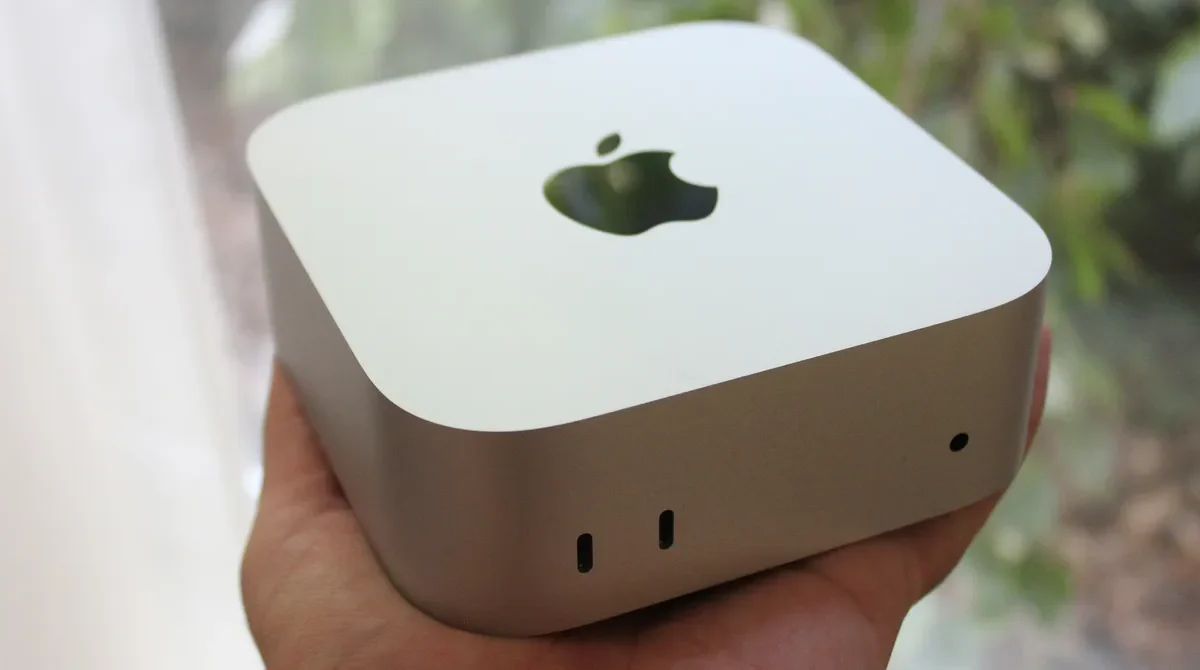
Apple’s latest Mac mini and Mac Studio models are now available, bringing M6, M5 Pro, M5 Max, and M5 Ultra chips with a stronger focus on local AI and professional workloads.
Apple has officially released its latest Mac mini and Mac Studio models on September 22, 2026, expanding its desktop lineup with the M6, M5 Pro, M5 Max, and M5 Ultra chips.
The update matters for more than raw speed. Apple is increasingly positioning its desktop Macs around local AI processing, demanding professional workflows, high-bandwidth memory, and compact workstation performance.
The Mac mini is now available with M6 or M5 Pro, while the Mac Studio moves to M5 Max and M5 Ultra.
Key Takeaways:
- The Mac mini is now available with M6 and M5 Pro chips.
- The Mac Studio moves to M5 Max and M5 Ultra.
- Some M5 Ultra configurations support up to 512GB of unified memory.
- Wi-Fi 7, Bluetooth 6, and Thunderbolt 5 are available on supported models.
- Apple’s performance figures come from its own testing and should not be treated as independent benchmarks.
Mac mini M6 Becomes Apple’s New Desktop Entry Point
The biggest mainstream update is the new Mac mini.
The M6 model features a 12-core CPU and 12-core GPU, while unified memory starts at 16GB and can be configured up to 32GB. Apple says memory bandwidth reaches up to 170GB/s.
The company is putting particular emphasis on artificial intelligence workloads.
The GPU includes neural accelerators designed to speed up calculations used by generative AI models, image processing tools, and professional applications that increasingly rely on machine learning.
Apple says the M6 Mac mini can deliver up to four times the AI performance of certain previous configurations, alongside improvements in CPU, GPU, and storage performance.
Those numbers are useful for understanding Apple’s performance targets, but they require context. They come from Apple’s own testing under specific workloads and should not be interpreted as a universal fourfold increase across every application.
The Mac mini M6 starts at $899 in the United States, while the more powerful Mac mini with M5 Pro starts at $1,699, according to Apple.
M5 Pro Pushes the Mac mini Closer to Workstation Territory
The M5 Pro version significantly changes what users can expect from Apple’s smallest desktop.
Apple offers configurations with up to an 18-core CPU and 20-core GPU, alongside as much as 64GB of unified memory and 307GB/s of memory bandwidth.
That additional capacity is aimed at heavier workloads such as software development, professional video editing, 3D rendering, scientific computing, and running larger AI models locally.
Connectivity is another important distinction.
The M5 Pro Mac mini includes three Thunderbolt 5 ports, while the M6 version continues to use Thunderbolt 4. Both models support newer wireless standards including Wi-Fi 7 and Bluetooth 6, as well as 2.5Gb Ethernet with an optional 10Gb Ethernet configuration.
For professional users, this may be one of the more meaningful changes.
The Mac mini is no longer simply a compact and relatively affordable desktop. Higher-end configurations increasingly overlap with workloads that would previously have required a much larger workstation.
For more coverage of new processors, AI hardware, and upcoming Apple products, visit TechNewsXplore.
Mac Studio M5 Ultra Supports Up to 512GB of Unified Memory
The new Mac Studio operates in a very different performance category.
The M5 Max model features an 18-core CPU and can be configured with up to a 40-core GPU and 128GB of unified memory.
The M5 Ultra goes considerably further, with configurations reaching a 36-core CPU, 80-core GPU, and memory bandwidth of up to 1.2TB/s, according to Apple.
The headline configuration supports up to 512GB of unified memory.
There is an important availability detail, however. Apple says the 512GB configuration will not arrive until late October 2026.
That amount of memory could be particularly valuable for developers and professionals working with large AI models, complex 3D scenes, visual effects projects, or very large datasets.
Apple’s unified memory architecture also works differently from a traditional PC setup.
Instead of keeping system RAM and graphics memory completely separate, the CPU and GPU can access the same memory pool. For AI workloads in particular, this can make it possible to work with models that require very large amounts of memory without relying on a discrete GPU with an equally large amount of dedicated VRAM.
Apple Is Betting Heavily on Local AI
One theme runs through both product families: Apple wants more artificial intelligence workloads to run directly on the Mac.
The company is combining the CPU, GPU, Neural Engine, and dedicated neural accelerators to distribute different types of machine-learning calculations across the chip.
For developers, researchers, and businesses, local processing can offer several potential advantages.
Some workloads can run without depending entirely on cloud infrastructure, latency may be reduced, and sensitive data can remain on the device instead of constantly being transmitted to remote servers.
Apple claims the M5 Ultra can deliver up to 4.3 times higher AI performance in selected workloads compared with previous-generation systems.
Again, that figure comes from Apple’s internal testing using specific applications, models, and configurations. It does not mean every AI task will automatically run 4.3 times faster.
Independent testing will ultimately provide a clearer picture of how these chips perform across commonly used AI frameworks and production workflows.
Mac Studio Pricing Keeps It Firmly in the Pro Market
The new Mac Studio with M5 Max starts at $2,499 in the United States, while the M5 Ultra version starts at $5,499.
Prices increase substantially as buyers add more memory, storage, and higher-end chip configurations.
That pricing makes the M5 Ultra model unmistakably a professional workstation rather than a general-purpose desktop.
It is aimed at users whose work can justify very high memory capacity, fast media engines, substantial GPU resources, or local AI processing.
The Mac mini remains far more accessible.
For developers, creators, and power users who do not require the extreme capabilities of the Mac Studio, the M6 and M5 Pro configurations could offer a more practical balance between compact size, performance, and price.
Apple’s Desktop Strategy Is Becoming Clearer
Apple is not radically reinventing the Mac mini or Mac Studio in 2026.
Instead, it is strengthening the qualities that already define its desktop lineup: compact hardware, high performance per watt, unified memory, and increasingly powerful Apple Silicon.
What has changed is the emphasis.
AI workloads are now becoming a central part of Apple’s performance story, alongside traditional CPU and GPU improvements.
The M6 Mac mini represents the broader consumer and developer side of that strategy, while the M5 Ultra Mac Studio pushes Apple Silicon further into workstation-class territory.
The next meaningful test will come from independent benchmarks.
Real-world performance in software development, video production, 3D rendering, scientific workloads, and local AI inference will determine whether Apple’s latest performance claims translate into equally significant gains outside its own test environment.
FAQs:
When is the Mac mini M6 available?
Apple says the new Mac mini M6 is available starting September 22, 2026.
How much does the Mac mini M6 cost?
The Mac mini with M6 starts at $899 in the United States, according to Apple.
How much memory can the Mac Studio M5 Ultra support?
The Mac Studio with M5 Ultra can be configured with up to 512GB of unified memory. Apple says the 512GB option will become available in late October 2026.
Official & Reliable Sources:
Apple Newsroom — New Mac mini and Mac Studio availability
Apple announces availability of the new Mac mini and Mac Studio
Apple Newsroom — Mac mini with M6 and M5 Pro
Apple introduces the more powerful Mac mini with M6 and M5 Pro
Apple Newsroom — Mac Studio with M5 Max and M5 Ultra
Apple introduces Mac Studio with M5 Max and M5 Ultra
Apple — Mac Studio technical specifications
Official Mac Studio specifications

Alex Mercer is the managing editor of Tech News Xplore. A hardware journalist for over a decade, he has benchmarked more CPUs, GPUs and handhelds than he can count, and leads the publication's testing methodology and editorial standards.