Vibe coding is flooding the App Store: 560,000 new apps in six months, and almost nobody is downloading them
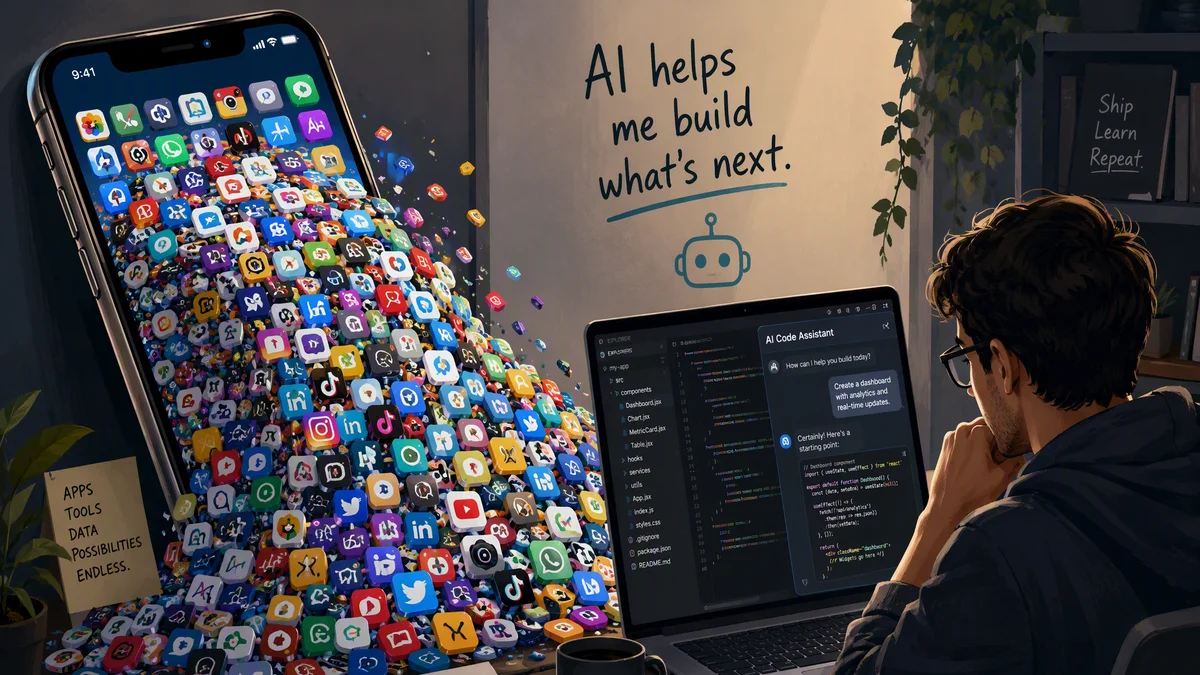
The App Store is having its biggest year ever, and its quietest. Apple added roughly 560,000 new apps in the first half of 2026, nearly matching the whole of 2025, and the platform is on pace to blow past one million submissions by December, eclipsing the record 890,000 set back in 2016. The fuel is vibe coding. The problem is that almost nobody is waiting on the other side.
Key Takeaways
- The App Store gained about 560,000 new apps in the first half of 2026, nearly matching all of 2025.
- Submissions are on track to exceed one million this year, beating the 2016 record of 890,000.
- AI tools like Replit, Bolt.new, Claude Code and Copilot let non-programmers publish apps.
- Downloads grew just 2 percent in the same period, so the flood is meeting almost no demand.
What vibe coding actually unleashed
The barrier to publishing an app used to be knowing how to build one. That barrier is gone. Tools like Replit and Bolt.new generate full-stack applications from natural language prompts, while agentic assistants like Claude Code and GitHub Copilot let hobbyists ship what would have taken a small team a season. The result is a submission wave from people who would never have entered the developer ecosystem at all, which is genuinely democratizing, and also the source of everything that follows.
Because the uncomfortable half of the data is the demand side. App Store downloads rose 3 percent in 2025 and just 2 percent in the first half of 2026. Supply is compounding at record pace while demand flatlines, which means the median new app is not finding a small audience; it is finding no audience at all.
The quality problem hiding in the numbers
A flood this size does not arrive as a wave of polished indie gems. It arrives as copycat apps cloning whatever charted last week, privacy-questionable knockoffs built to harvest rather than help, and apps that simply do not do what their store page claims, because the person who shipped them never fully understood what the AI wrote. None of this is hypothetical; it is the observable composition of the surge, and it is getting worse as the tooling improves.
Former App Store chief Phillip Shoemaker, who ran the platform from 2009 to 2016, has warned that the surge strains Apple’s review resources and creates openings for malicious actors. That warning carries weight precisely because it comes from the person who built the review system’s modern form: the gate was designed for a world where building an app filtered out most bad actors by effort alone. That filter no longer exists.
The echo across every platform
The App Store is not alone; it is just the most measurable version of a universal shift. LinkedIn is drowning in AI-written posts, as we covered in our report on the platform’s new slop-flagging button, and the pattern is identical: generation got cheap, distribution stayed flat, and quality signals drowned. Every platform that gates on review rather than generation is about to learn the same lesson Apple is learning now.
The economics that make the flood rational
Understand the incentive and the wave stops looking irrational. Vibe coding collapsed the cost of building an app to nearly zero, and app monetization remains a lottery where even a tiny hit rate can pay: one in a thousand apps finding a niche audience with ads or subscriptions covers a lot of free attempts. When attempts are free, the rational move is volume, and volume is exactly what the submission data shows. The flood is not a side effect of the tools; it is the tools working as economics dictates.
That framing also explains why pleas for restraint will accomplish nothing. The cost side of the equation lives with the submitters, while the quality side lives with Apple and its users. Floods like this only end when someone moves the cost back to the source, through fees, friction or enforcement, which is why Apple’s next move matters more than any developer community guidelines update.
What this does to honest indie developers
The collateral damage lands on the people the App Store was built for. A solo developer spending a year on a crafted app now launches into a search index polluted by hundreds of keyword-optimized clones, some generated in an afternoon specifically to siphon their idea. Discovery was already the hardest problem in mobile software; the vibe coding wave turned it from difficult to desperate.
What Apple can realistically do
The levers are limited and each has a cost. Tighten review and you slow legitimate developers while demanding review headcount that does not scale. Raise submission friction, through fees or requirements, and you tax the genuine hobbyists the tools were supposed to empower. Lean on algorithmic quality signals and you risk entrenching incumbents. The likeliest path is all three at once, applied gradually, plus something the industry keeps rediscovering: provenance and identity signals for AI-assisted work, so review effort concentrates where the risk is.
The sliver of genuinely good news
Buried in the flood is a real win worth naming: people with ideas and no programming background can now build software, and some of what they build is excellent. The democratization is real; it is just arriving with a noise floor the ecosystem has never had to manage. The platforms that solve discovery and trust in a post-scarcity software world will define the next era of app stores.
For users, the practical defense is learning to read the store like a skeptic. Check the developer’s history, not just the screenshots. Look at review velocity patterns, since clone floods often carry bursts of generic five-star ratings. Prefer apps with update histories measured in years. And treat any brand-new app requesting broad permissions as guilty until proven innocent. The golden age of app abundance and the golden age of app skepticism are, unfortunately, the same age.
App Store policies and submission guidelines are published on Apple’s developer site.
The bottom line
A million apps a year sounds like a golden age until you notice the downloads graph is flat. Vibe coding removed the effort filter that kept the App Store’s gate manageable, and now everyone, Apple, developers and users, is living in the noise. The next great app will still break through. It will just have to shout over a million others to do it.
Has vibe coding helped or hurt the apps you use? Tell the tech desk.

Alex Mercer is the managing editor of Tech News Xplore. A hardware journalist for over a decade, he has benchmarked more CPUs, GPUs and handhelds than he can count, and leads the publication's testing methodology and editorial standards.
1 reader comment