Samsung Could Be Making Money From Every iPhone Duo While Fighting It With the Galaxy Z Fold8
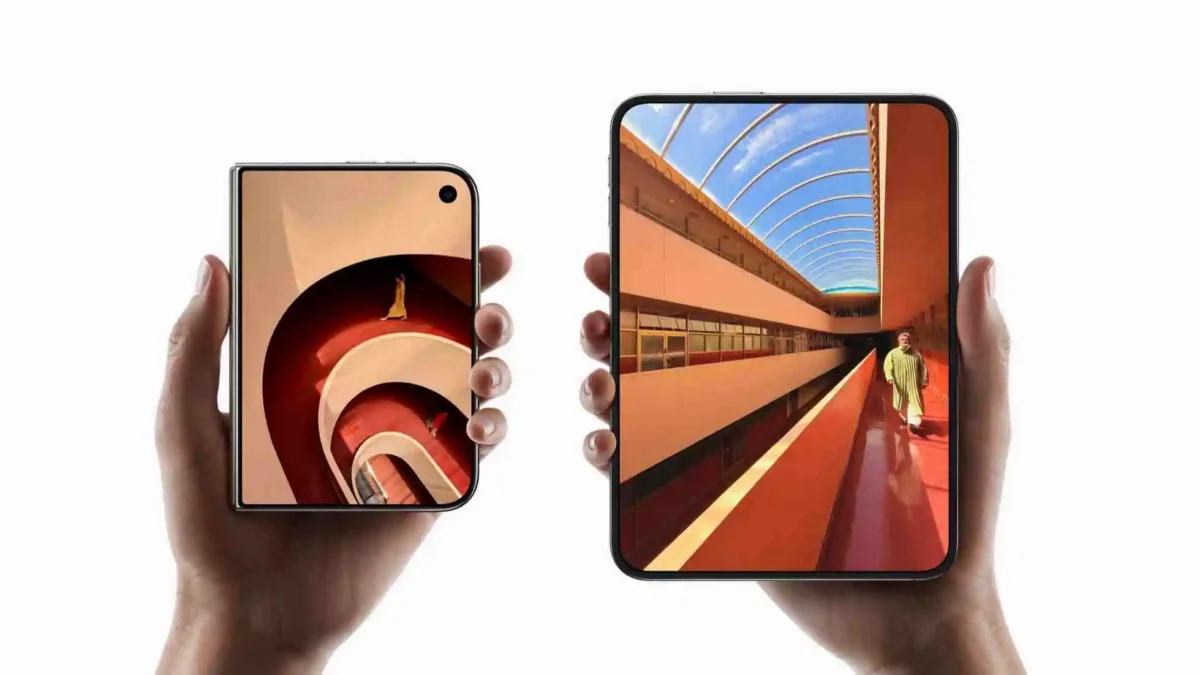
Apple has finally entered the foldable phone war, but one of the biggest winners from the iPhone Duo might be the company Apple is trying to beat.
While Samsung Electronics is fighting the new iPhone Duo with its Galaxy Z Fold8, Samsung’s display business is supplying foldable screens used in Apple’s first folding iPhone, according to Reuters.
It creates one of the more amusing situations in the smartphone industry: Apple can take sales from Samsung’s Galaxy division while simultaneously generating component business for another part of Samsung.
And if recent supply-chain claims are accurate, those displays may be considerably more lucrative than the panels inside conventional flagship phones.
Key Takeaways
- Samsung Display supplies foldable screens used in Apple’s new iPhone Duo, according to Reuters.
- Samsung Electronics simultaneously competes against Apple with the Galaxy Z Fold8.
- Reports claim Apple could be paying roughly $250 for each folding inner display under a three-year arrangement, but Apple and Samsung have not publicly confirmed those terms.
- The iPhone Duo starts at $1,999 and features a 7.6-inch folding inner display.
- Apple’s arrival could expand the overall foldable market, potentially benefiting Samsung even beyond direct Galaxy sales.
Samsung can compete with Apple and supply Apple at the same time
At first glance, the relationship sounds contradictory.
Samsung has spent years building the Galaxy Fold family into the most recognizable alternative to conventional smartphones. Its latest Galaxy Z Fold8 continues that strategy with a redesigned foldable form factor and hardware built on years of Samsung’s experience in the category.
Then Apple arrives with the iPhone Duo.
Apple’s first foldable opens into a 7.6-inch display, uses the A20 Pro processor and starts at $1,999. It puts Apple directly into territory Samsung helped create years ago.
Samsung naturally wants Galaxy buyers to choose the Fold8 instead.
But Samsung isn’t a single business operating in a single market. Samsung Display manufactures OLED panels used across the consumer electronics industry, including components supplied to competitors.
Reuters reports that Samsung Display is supplying the folding screens used in the iPhone Duo.
So Samsung effectively has two ways to benefit from the foldable boom.
If somebody buys a Galaxy Fold, Samsung Electronics wins.
If somebody chooses Apple’s foldable instead, Samsung Display can still participate in the supply chain.
That’s a pretty comfortable position to occupy.
The rumored $250 display deal needs an important warning label
This is where confirmed information and supply-chain reporting need to be separated carefully.
A recent claim attributed to Chinese leaker Instant Digital says Samsung Display signed an exclusive three-year agreement to provide foldable panels for the iPhone Duo and future Apple foldables.
The same report puts the price of the internal folding panel at approximately $250 per unit. Separate reporting has also associated the iPhone Duo with Samsung Display’s newer M16 OLED material.
Those numbers are interesting—but they are not officially confirmed.
Neither Apple nor Samsung has publicly announced a $250 component price, a three-year exclusive contract or the exact commercial terms surrounding the displays.
Independent reports covering the leak have also explicitly noted that the figures cannot currently be verified.
That means headlines claiming Samsung definitely receives $250 from every iPhone Duo should be treated cautiously.
What we can say with far greater confidence is that Samsung Display supplies foldable screens for the device.
And even without knowing the exact price per panel, that’s strategically significant.
Foldable displays are considerably more complicated than traditional smartphone screens. They have to repeatedly bend without destroying the OLED structure while maintaining brightness, color consistency and durability.
Apple’s official specifications highlight just how much engineering went into its implementation.
The company says the Duo’s inner screen uses a flexible OLED panel combined with specialized layers and structural reinforcement, while the phone itself features a precision hinge designed for repeated folding.
That complexity creates an obvious opportunity for specialized display manufacturers.
Apple could become Samsung’s biggest foldable rival—and customer
The irony gets even better when you look at the wider market.
Samsung is still the company Apple needs to catch.
Reuters reported that Samsung remains the global foldable leader and has responded to Apple’s entrance with a promotional campaign emphasizing its years of experience in folding hardware.
Samsung isn’t exactly welcoming Apple quietly.
But Apple’s arrival could also make the entire category larger.
Foldables have remained a relatively small part of global smartphone shipments despite years of increasingly impressive devices from Samsung, Google, Huawei, Xiaomi and others.
Apple changes the equation simply because of the size of the iPhone ecosystem.
Analysts cited by Reuters estimate that Apple could quickly capture a substantial part of the foldable market, while overall foldable shipments are expected to grow as the category gains wider visibility.
That might sound like terrible news for Samsung Electronics.
For Samsung Display, however, millions of folding iPhones could mean millions of additional OLED panels.
That’s why the relationship between these companies is more complicated than the usual “Apple vs. Samsung” headline suggests.
Readers following the rapidly changing smartphone, semiconductor and display markets can find more analysis on TechNewsXplore.
Samsung may win regardless of which foldable you buy
This story ultimately illustrates how strange the modern technology supply chain has become.
Apple and Samsung can be fierce competitors at the retail counter while remaining deeply connected behind the scenes.
Consumers see two premium foldable phones fighting for the same $2,000-class customer.
The supply chain sees something completely different.
Samsung has spent years developing foldable-display manufacturing expertise. Apple entering the market doesn’t erase that advantage—in some ways, it validates it.
Of course, there is still plenty we don’t know.
The reported $250 panel price could prove accurate, but it remains unconfirmed. The alleged three-year exclusivity could also change as Apple diversifies suppliers, something the company has historically tried to do with critical components.
Those questions belong firmly in the speculation column for now.
What is confirmed is already interesting enough: Apple’s most important new iPhone form factor relies on foldable display technology supplied by one of its biggest smartphone rivals.
Samsung may therefore be fighting the iPhone Duo with one hand while helping build it with the other.
In the strange economics of modern smartphones, that’s not a contradiction.
It’s very good business.
Confirmed Facts vs. Unconfirmed Reports
Confirmed: Apple launched the iPhone Duo on September 9, 2026, with a 7.6-inch folding inner display and a starting US price of $1,999.
Confirmed: Reuters reports that Samsung Display supplies foldable screens used in the iPhone Duo while Samsung Electronics competes against Apple with its own Galaxy foldables.
Unconfirmed: Reports attributed to leaker Instant Digital claim Apple agreed to roughly $250 per folding panel under an exclusive three-year Samsung Display contract. Apple and Samsung have not publicly confirmed these commercial terms.
Analysis: Samsung could benefit financially from growth in Apple’s foldable sales while simultaneously defending its Galaxy Fold market share. The scale of that benefit cannot yet be calculated reliably without confirmed component pricing and shipment volumes.
Official / Reliable Sources
- Apple Newsroom — Official iPhone Duo announcement and specifications:
Apple unveils iPhone Duo - Samsung Newsroom — Official Galaxy Z Fold8 announcement and product information:
Samsung Galaxy Z Fold8 official announcement - Reuters — Samsung’s response to Apple’s foldable launch and Samsung Display’s supplier role:
Samsung braces for Apple’s foldable iPhone challenge - Reuters — Foldable smartphone market context and Apple’s potential impact:
Apple prepares to make a splash in the foldable phone market - 9to5Mac — Report covering the unconfirmed $250 Samsung Display panel claim:
Apple reportedly paying $250 per iPhone Duo display in Samsung deal

Alex Mercer is the managing editor of Tech News Xplore. A hardware journalist for over a decade, he has benchmarked more CPUs, GPUs and handhelds than he can count, and leads the publication's testing methodology and editorial standards.