US data centers are on track to consume 20% of the nation’s power by 2035
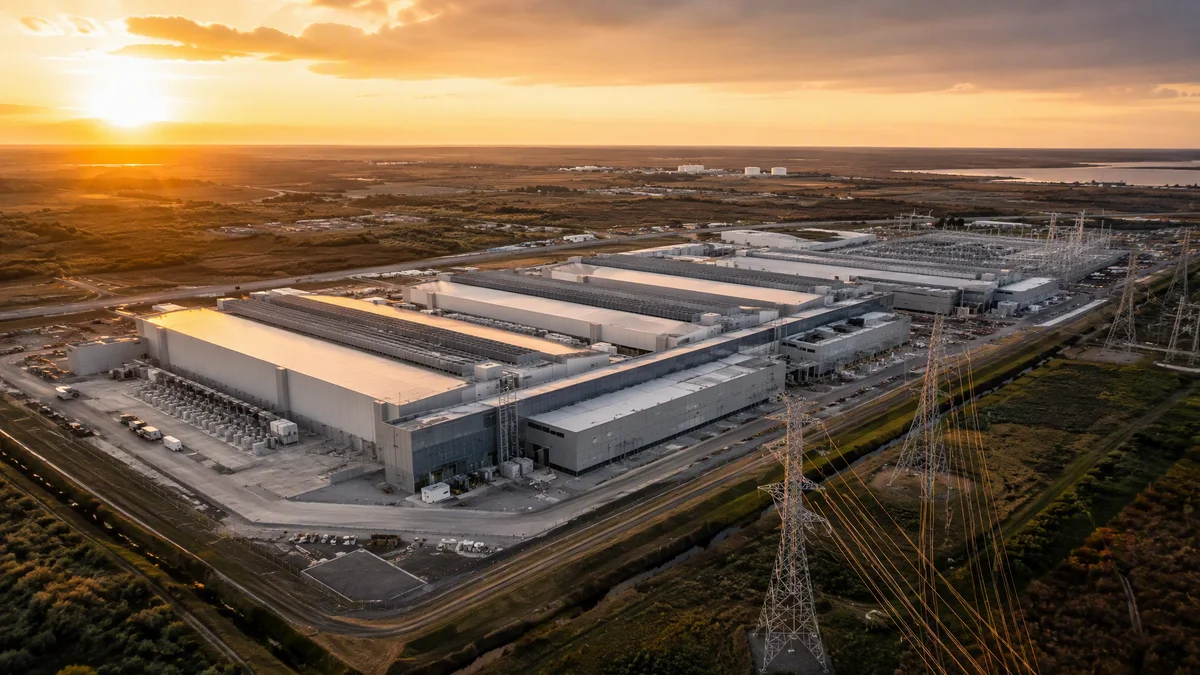
The AI boom has a meter running, and the reading is startling. A new forecast from BloombergNEF projects that US data centers will consume roughly 20 percent of the nation’s electricity by 2035, around 194 gigawatts, nearly triple today’s share. Even more sobering: the grid, expanding at a record pace, is still forecast to fall short.
Key Takeaways
- BNEF forecasts US data centers will use about 20 percent of national electricity by 2035.
- That is roughly 194 gigawatts, up from about 5.9 percent of US electricity today.
- The projection is 83 percent higher than the same firm’s forecast from last year.
- Even with record grid expansion, a shortfall of nearly 20 gigawatts is expected.
The numbers behind the forecast
Start with today: data centers already consume about 5.9 percent of US electricity, a share that has climbed steadily through the cloud era. The AI era hits different. Training clusters and inference farms packed with accelerators draw power densities that make conventional server halls look frugal, and every hyperscaler is building them simultaneously. BloombergNEF’s projection of 194 gigawatts by 2035 is not an outlier scenario; it is the firm’s central read of announced capacity and demand curves.
The detail that should focus minds is the revision. This forecast is 83 percent higher than the one the same researchers issued a year ago. Energy modeling is not prone to swings like that. It means the buildout announced in the last twelve months genuinely moved the national trajectory, and it means next year’s revision could easily move it again.
A trillion dollars of concrete and copper
The power projection is the downstream symptom of an upstream spending spree. Google, Amazon, Microsoft and Meta have poured over $1.1 trillion into AI infrastructure across the last three years, and the majority of their combined $745 billion in capital expenditure this year is earmarked for data centers, chips and power. That is not a metaphorical bet on the future; it is a physical one, measured in substations, turbines and transmission lines.
The 20-gigawatt problem
Here is where forecast meets physics. Utilities are interconnecting new generation at a record clip, and it is still not enough: BNEF expects a shortfall of nearly 20 gigawatts between what data centers will want and what the grid can deliver. Twenty gigawatts is dozens of large power plants. The consequences are already visible: data center operators signing deals for dedicated nuclear capacity, reviving shuttered plants, and locating facilities where the power is rather than where the customers are.
The nuclear pivot nobody predicted
The clearest sign that the industry takes the power constraint seriously is where the money is going: nuclear. Hyperscalers have spent the last two years signing agreements for dedicated nuclear capacity, funding reactor restarts and bankrolling next-generation designs, not out of environmental sentiment but because nuclear is the only carbon-free source that runs at data center scale around the clock. A decade ago, tech companies bought renewable credits and called it a strategy. Now they are buying reactors. That is what a binding constraint looks like.
Natural gas is filling the gap in the meantime, which creates its own tension with the industry’s climate commitments. The honest summary of the moment: the AI buildout is simultaneously accelerating clean energy investment and extending fossil generation, and which force wins will be decided region by region, grid by grid.
The local fights ahead
Forecasts are abstract; substations are not. The communities where these facilities land are already pushing back, over water use, noise, land and rates, and some are winning. Expect the politics of data center siting to become a durable local issue across the US, and expect the industry’s response, community funds, jobs promises, behind-the-meter power, to become as standardized as the racks themselves.
What it means beyond the energy sector
For consumers, the costs leak into electricity rates in buildout regions, and into the price of everything else AI touches. We have already documented the memory market distortion in our report on how AI demand is repricing consumer hardware; electricity is the same story at grid scale. For policymakers, the question shifts from whether to build to who pays for building, and who gets priority when supply runs short.
For the tech industry itself, power is now the binding constraint, not chips, not capital. Every AI roadmap quietly contains an energy roadmap, and the companies that locked in generation early are holding a strategic asset that money alone can no longer quickly buy.
The counterargument worth hearing
Forecasts assume demand. If AI efficiency improves faster than expected, or if the revenue fails to materialize and the buildout slows, the curve bends down. Skeptics note that data center projections have overshot before. Fair enough. But an 83 percent upward revision driven by signed projects is not hype; it is construction schedules.
Consumers will feel this before they understand it. Electricity rates in heavy buildout regions are already climbing as utilities socialize the cost of new generation and transmission across all customers, and regulators in several states have begun asking whether residential ratepayers should subsidize infrastructure built primarily for a handful of technology companies. How that cost-allocation fight resolves, state by state, will determine whether the AI boom shows up on household bills as a noticeable line item or gets absorbed by the companies driving it.
The international comparison sharpens the picture further. The United States hosts the largest concentration of AI infrastructure on Earth, which makes it the stress test for everyone else. Grids in Ireland, Singapore and parts of Northern Europe have already imposed moratoriums or strict conditions on new data center connections after watching local demand spike. How the US manages the next decade of buildout, the permitting reform, the generation mix, the cost allocation, becomes the playbook or the cautionary tale for every other market chasing the same industry.
The underlying research comes from BloombergNEF, with reporting by the Financial Times on the spending figures.
The bottom line
One fifth of American electricity, flowing to AI, within a decade: that is the trajectory the industry has already poured a trillion dollars into building. The grid cannot currently keep up, and every gigawatt of the gap is a business problem, a policy fight and a utility bill coming due. The AI race is now an energy race.
Is the buildout sustainable, or a bubble with a power cord? Tell the tech desk.

Alex Mercer is the managing editor of Tech News Xplore. A hardware journalist for over a decade, he has benchmarked more CPUs, GPUs and handhelds than he can count, and leads the publication's testing methodology and editorial standards.
1 reader comment