Microsoft is merging Copilot into a single app, and retiring features to do it
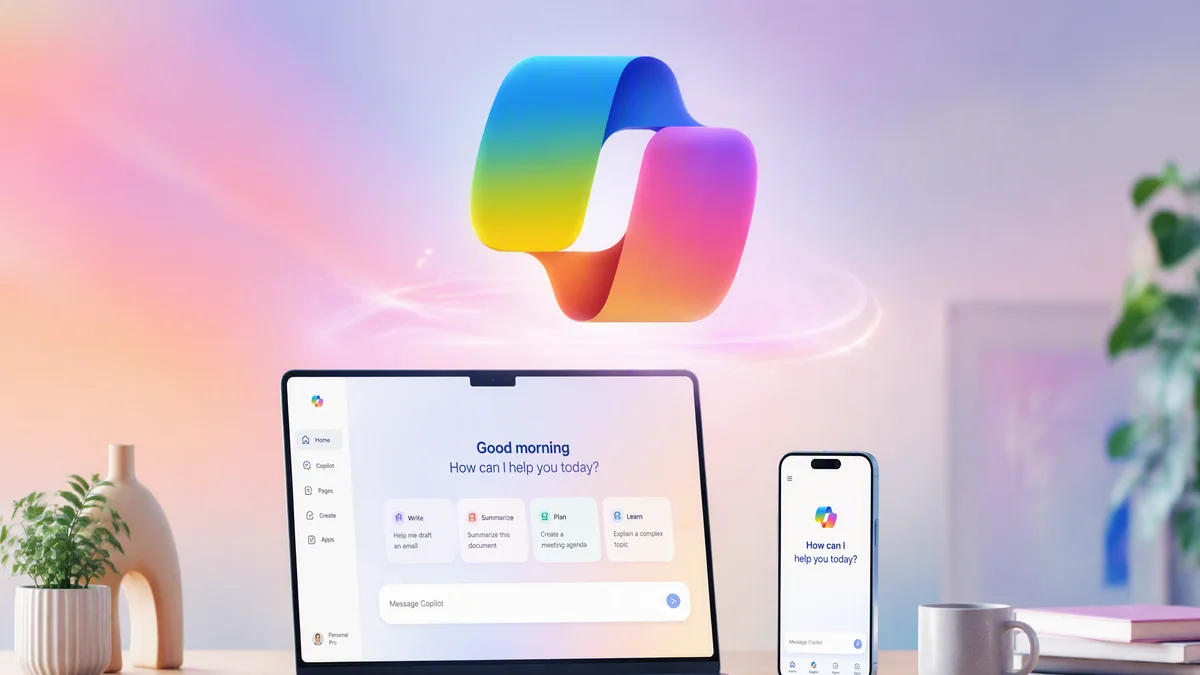
Microsoft has finally answered a question it has been asking itself in public for years: where does Copilot actually live? According to a new support document, the standalone Copilot app and Microsoft 365 Copilot are merging into a single unified application, rolling out on mobile first, with Windows and macOS following as an opt-in. Three consumer features are being retired to make it happen.
Key Takeaways
- The standalone Copilot app and Microsoft 365 Copilot are merging into one app.
- The unified app keeps chat and image generation and adds direct access to Word, Excel, Outlook and files.
- Group Chat, Podcasts and Deep Research are being retired for consumers starting August 18.
- A fuller “super app” with coding and agentic tools is reportedly coming later this quarter.
The consolidation, explained
Until now, Microsoft maintained a genuinely confusing pair of Copilot apps: one standalone assistant, one Microsoft 365 companion, with overlapping capabilities and different identities depending on whether your account was personal, work or school. The unified app collapses that. Chat and image generation survive as the core, now joined by direct access to Word, Excel, Outlook and the rest of the Microsoft 365 suite, with personal, work and school accounts supported in one place and logically separated for data purposes.
The pricing structure stays familiar. Free users keep basic chat and image creation, while a Microsoft 365 subscription unlocks higher limits and the deeper document integration. Copilot becomes the front door to the productivity suite rather than a neighbor that occasionally visits.
What is being killed, and why it matters
Consolidation stories always have a body count, and this one retires three consumer features: Group Chat, Podcasts and Deep Research, all going away starting August 18, with existing content downloadable beforehand. Deep Research stings most, since agentic research was one of Copilot’s most differentiated capabilities, and its consumer retirement suggests Microsoft is refocusing that capability toward its paid tiers or the coming rebuild.
The pattern is worth recognizing because it has become an industry habit: launch broadly, watch usage data, then prune the features that did not find an audience and fold the winners into the flagship surface. Copilot’s feature churn looks less like instability from this angle and more like a very expensive, very public beta program.
The “super app” waiting in the wings
The merger is reportedly not the end state. CEO Satya Nadella has talked about a fuller super app arriving later this quarter under executive Jacob Andreou, one that pulls Copilot’s coding and agentic tools into the same surface. Read together, the strategy clarifies: one app for everyone first, then one app for everything. Microsoft is not simplifying Copilot because the vision shrank; it is clearing the deck for a bigger one.
The account problem Microsoft had to solve
The unglamorous heart of this merger is identity. Copilot’s two-app split was never really a design choice; it was a consequence of Microsoft’s dual universe of personal Microsoft accounts and work or school Entra accounts, with different data boundaries, different compliance rules and different feature sets. Unifying the apps only works because the new architecture keeps those account types logically separated inside one shell: one icon, two worlds, no cross-contamination of your employer’s data with your personal chats.
Getting that separation right is the difference between a convenient app and an enterprise incident, and it is almost certainly why the rollout is staged, mobile first, desktop later, opt-in before default. Microsoft is migrating hundreds of millions of users across a data-boundary change, and it knows the cost of fumbling it.
Reading the retirement list strategically
Look at what survived versus what died and the product thesis gets clearer. Chat and image generation are table stakes, so they stay. Deep document integration is the moat no rival can copy, so it becomes the centerpiece. Group Chat and Podcasts were experiments without an audience, and consumer Deep Research presumably cost more in compute than it earned in retention. The unified app is not just tidier; it is a profit-and-loss statement rendered as an interface.
What users should do before August 18
If you used any of the retiring features, download your content now rather than during the deprecation rush. If you live in both Copilot apps today, expect a migration prompt and give the unified app a week before judging it, since early rollouts of merged apps historically ship rough and improve fast. And if you are a free user, nothing about your core experience gets worse; the floor stays where it is.
The broader AI assistant consolidation is happening everywhere simultaneously, from OpenAI’s hardware ambitions to Google’s Gemini push into every surface it owns. The assistant wars have moved past the “which model” phase into the “which one app rules them all” phase.
The competitive subtext is impossible to miss. Every major AI assistant is racing to become the single surface through which work happens, and Microsoft holds a card nobody else does: the documents themselves. An assistant that can reach directly into your actual Word files, spreadsheets and inbox is categorically stickier than one that answers questions in a vacuum. The unified app is Microsoft finally playing that card properly, and the super-app roadmap suggests it knows the window to exploit the advantage is now.
For everyday users the migration should be nearly invisible: sign in once, and the app picks up where the old ones left off. The friction will be felt by organizations with strict data policies, whose administrators will need to review how the unified app handles account separation before approving it fleet-wide. Expect a wave of IT department memos before the desktop rollout completes.
The merger details and migration guidance are on Microsoft’s official support pages.
The bottom line
One Copilot app is the product Microsoft should have shipped two years ago, and the retired features are the cost of admitting it. The merger itself is good news for anyone confused by the current split, and the super-app roadmap makes clear this is consolidation for expansion, not retreat. Download your Deep Research archives before August 18, and welcome to the single front door era.
Will you move to the unified Copilot app? Tell the tech desk.

Alex Mercer is the managing editor of Tech News Xplore. A hardware journalist for over a decade, he has benchmarked more CPUs, GPUs and handhelds than he can count, and leads the publication's testing methodology and editorial standards.
1 reader comment