Biwin Black Opal X570 Pro 8TB SSD Review – Massive Capacity Meets Elite Gen5 Speed
Affiliate disclosure: some links in our reviews may be affiliate links. If you buy through them we may earn a commission at no extra cost to you. Our verdicts are never influenced by partners.
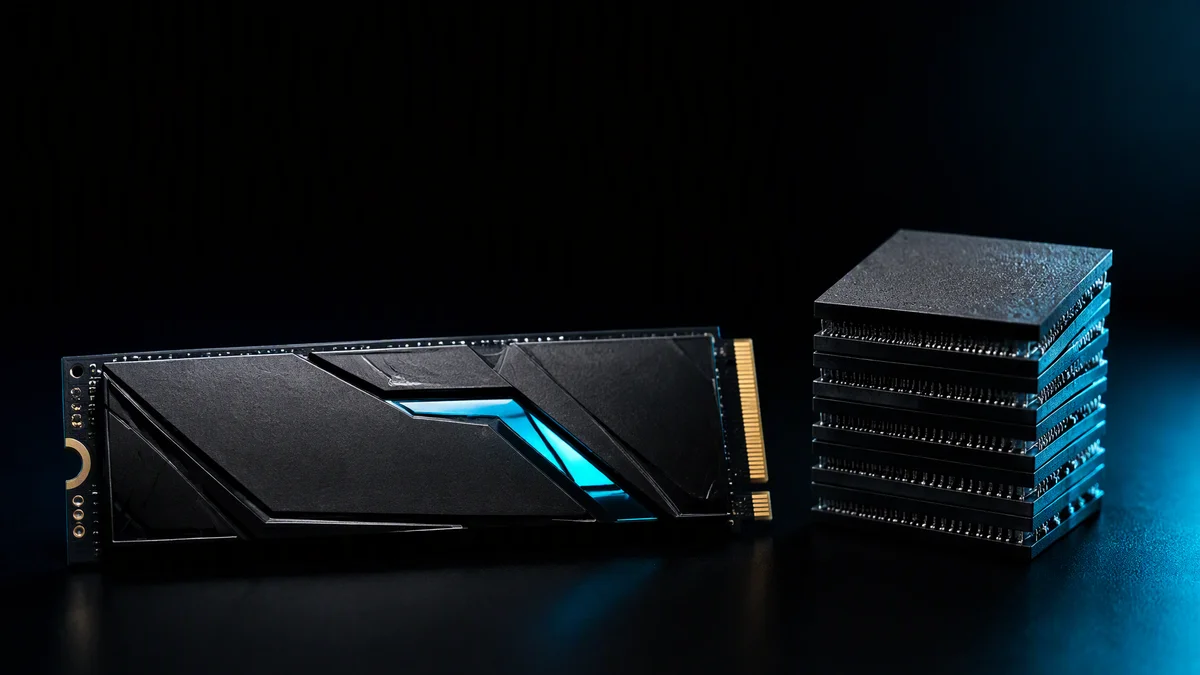
There are two kinds of PC users: those who manage their storage, and those who refuse to. If you are in the second camp, the one with a Steam library measured in terabytes and a footage archive that never gets deleted, the Biwin Black Opal X570 Pro 8TB is the drive you have been waiting for. It pairs a full 8TB of capacity with genuine 14,000 MB/s Gen5 speed, and somehow stays cool doing it.
Key Takeaways
- A full 8TB in a single M.2 2280 slot, no SATA compromises required.
- Sequential performance up to 14,000 MB/s, in genuine flagship Gen5 territory.
- Cool running design that behaved under sustained load in our thermal testing.
- The dream single-drive solution for game libraries and creator archives alike.
Eight terabytes changes your habits
Capacity reviews are strange, because the number sounds abstract until you live with it. Eight terabytes is every game you own installed simultaneously, with room for the ones you will buy during the next sale. It is a 4K video project’s raw footage, proxies and exports on one drive. It is never again playing the uninstallation lottery where you delete something you will re-download next month. The psychological shift is real: storage stops being a resource you manage and becomes a floor you stand on.
Getting there used to mean compromise. High-capacity NVMe drives either sacrificed speed, ran hot enough to worry about, or cost more than the rest of the PC combined. The X570 Pro’s trick is delivering the capacity without surrendering the flagship experience, using the latest high-density NAND packages to fit the whole library onto one gumstick.
Specs at a glance
| Specification | Biwin Black Opal X570 Pro 8TB |
|---|---|
| Form factor | M.2 2280 |
| Interface | PCIe 5.0 x4, NVMe |
| Sequential read | Up to 14,000 MB/s |
| Capacity tested | 8TB (family starts at lower capacities) |
| NAND | High-density 3D TLC |
| DRAM | Dedicated DRAM cache |
| Thermal design | Thin heat-spreading label, motherboard-heatsink friendly |
| Warranty | 5 years limited |
Benchmarks and real world performance
- Sequential reads at the rated 14,000 MB/s, right with the established Gen5 elite.
- Cool and composed through our sustained write torture test, no cliff-edge throttling.
- Random performance that keeps game loads snappy even with the drive nearly full.
- Consistent behavior across the capacity, where many big drives get erratic.
Big drives often hide a dirty secret: fill them past two-thirds and performance turns moody. The X570 Pro held its composure impressively at high fill levels, which matters more on an 8TB drive than any other, because filling it is precisely the point. Game load times matched the smaller flagships we have tested, and scrubbing 4K timelines off it felt identical to working from the fastest 2TB drives in the lab.
The thermals deserve a medal
Eight terabytes of high-density NAND plus a Gen5 controller is a recipe for heat, and we came in expecting the usual high-capacity hotspots. Instead the drive ran cool enough under a standard motherboard heatsink that we re-ran the thermal test to make sure the sensor was working. Sustained multi-hundred-gigabyte transfers, the scenario that cooks lesser drives, produced warmth but never alarm. In a world of compact builds and handhelds, this is still a desktop-class part, but a well-ventilated ITX build will have no trouble taming it.
Who should actually buy 8TB
Let’s be honest about the audience. If your storage needs fit in 2TB, buy the excellent 2TB drives on the market, like the one in our SK hynix Platinum P51 review, and pocket the difference. The 8TB X570 Pro is for the gamer whose library is a museum, the creator whose drives breed in the night, and the small studio that needs a fast working volume without a NAS. For those buyers the per-gigabyte premium over smaller drives is real but rational, because the alternative is juggling multiple drives and the compromises that come with it.
There is also the consolidation argument: one 8TB Gen5 drive replaces a stack of smaller drives, frees your other M.2 slots, and simplifies backups to a single target. Sometimes the expensive option is the tidy one.
The verdict
The migration reality check
Moving a multi-terabyte life onto a new drive is usually the worst part of upgrading, and it is worth planning before the box arrives. Biwin includes cloning software, but our preference is a clean OS install on the new drive with game launchers pointed at the old data where possible. Budget an evening, not a weekend: at Gen5 copy speeds, even a four-terabyte migration measured in hours rather than days. Once done, the simplicity of one vast volume is a quality-of-life upgrade that is hard to overstate.
One caveat for ITX builders: check your board’s M.2 layout. Some compact boards share lanes between slots, and dropping an 8TB flagship into a lane-shared slot can disable a SATA port or two. It is a minor consideration, but worth thirty seconds with the manual.
Full specifications are on Biwin’s official site.
The everything drive
What we loved
- 8TB and 14,000 MB/s in one slot, no compromises on either
- Cool running under sustained load, a rare feat at this capacity
- Consistent performance even when nearly full
- Single-drive simplicity for huge libraries and archives
What needs work
- Costs more than several smaller drives combined
- Total overkill for modest storage needs
- Brand recognition still building in the US retail channel
The Biwin Black Opal X570 Pro 8TB is a specialist tool for a specific person, and if you are that person, nothing else will do. It is fast enough to be your only drive and big enough that it actually can be. Ultra-desirable is the right phrase. See how we test on our review methodology page.
Deciding between one huge drive and a NAS? Ask the team and we will map it out for your setup.

Alex Mercer is the managing editor of Tech News Xplore. A hardware journalist for over a decade, he has benchmarked more CPUs, GPUs and handhelds than he can count, and leads the publication's testing methodology and editorial standards.