ASUS ROG Ally X Gaming Handheld Review – Bigger Battery, Better Ergonomics
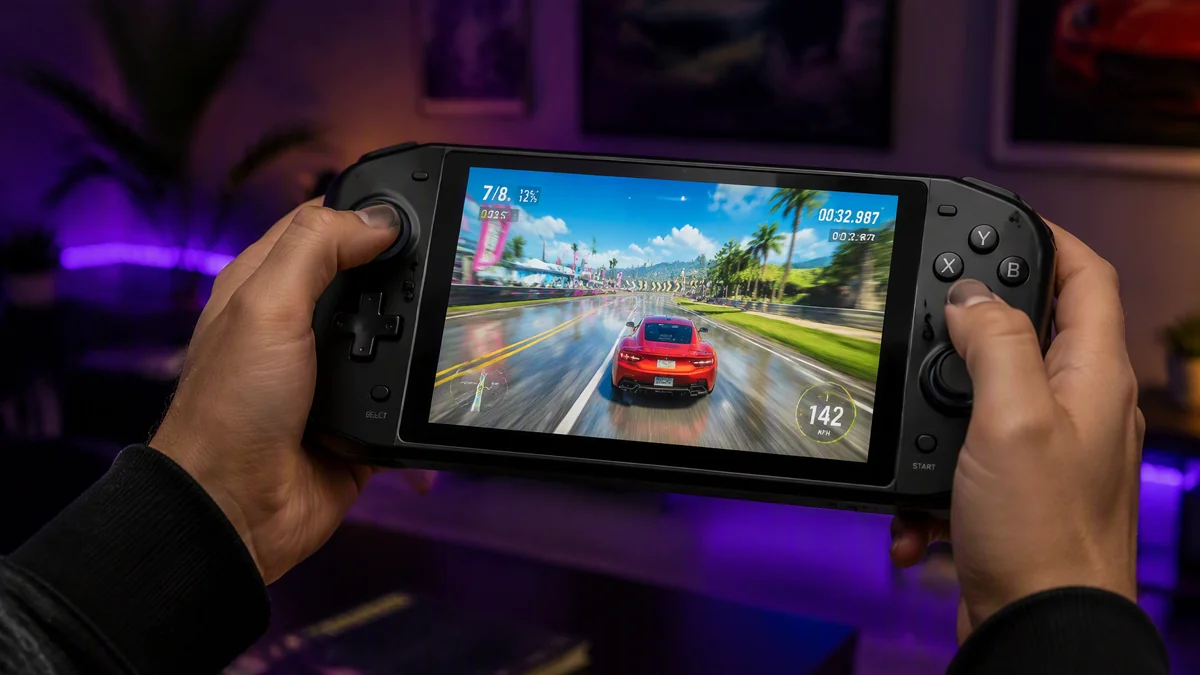
I wanted to love the original ROG Ally. The performance was there, the screen was there, and then, ninety minutes into a flight, the battery was gone. The ROG Ally X is ASUS admitting that out loud: same winning formula, twice the battery, and a grip that finally respects adult hands.
Key Takeaways
- An 80Wh battery, double the original, transforms real world play time.
- Deeper grips, repositioned sticks and better buttons fix the ergonomics.
- 24GB of faster RAM gives the Ryzen Z1 Extreme more breathing room.
- Windows 11 remains both the superpower and the annoyance.
What changed, and why it matters
The Ally X is not a sequel; it is a revision, and ASUS was refreshingly honest about that framing. The screen stays the same excellent 7 inch 1080p 120Hz panel with variable refresh rate. The APU stays the Ryzen Z1 Extreme. Everything else got touched: the chassis is slightly thicker to house an 80Wh battery, the grips are deeper and rounder, the sticks and D-pad are revised, the XG Mobile port is gone in favor of a second USB-C with USB4, and RAM jumps to 24GB of faster LPDDR5X.
That RAM bump deserves attention. The Z1 Extreme shares memory between system and GPU, and 16GB forced awkward compromises in big modern titles. With 24GB you can allocate generously to the GPU without the operating system suffocating, and the faster memory speeds feed the integrated graphics what they crave.
Specs at a glance
| Component | ROG Ally X |
|---|---|
| APU | AMD Ryzen Z1 Extreme (8 cores Zen 4, RDNA 3 graphics) |
| Display | 7 inch IPS, 1920×1080, 120Hz, VRR |
| Memory | 24GB LPDDR5X |
| Storage | 1TB PCIe 4.0 NVMe, M.2 2280 (easy upgrade) |
| Battery | 80Wh |
| Ports | USB4 Type-C, USB-C 3.2, microSD, 3.5mm audio |
| Weight | 678g |
| OS | Windows 11 with Armoury Crate SE |
Benchmarks and real world performance
- At 15W TDP, the Ally X matches the original Ally frame for frame, as expected, but holds those settings for over three hours in demanding titles.
- At 25W plugged in, 1080p medium settings in current AAA games land in the 40 to 60 fps window, where the 120Hz VRR panel hides the variance beautifully.
- The faster memory earns a small but real uplift, roughly a few frames in GPU bound scenes versus the original at identical TDP.
The VRR display continues to be the Ally’s secret weapon. Frame rates in the 40s feel smooth on this panel in a way they simply do not on fixed refresh handheld screens. It is the single biggest reason the Ally line feels faster than its raw numbers suggest.
The battery is the review
Everything else about this device is refinement; the battery is transformation. Doubling capacity takes demanding games from about an hour and a half to around three, and lighter indie titles stretch toward a full workday. The practical effect is bigger than the numbers: you stop managing the battery and start forgetting about it, which is precisely how a portable device should behave.
Storage upgrades are refreshingly civilized too: a full size M.2 2280 slot under an easy access back panel, so pairing it with a mainstream drive like the FireCuda X1070 family is a fifteen minute job rather than surgery.
Ergonomics: the spec you feel at hour two
Spec sheets cannot capture what a handheld feels like forty minutes into a session, and that is exactly where the original Ally drew criticism: flat grips, sharp transitions, hands cramping where the chassis ended too soon. The Ally X’s deeper, rounder grips change the load path completely. Weight shifts from your fingers to your palms, the sticks sit at a more natural thumb angle, and the revised face buttons require less travel. Our tester with large hands called it the first Windows handheld he could play for two hours without shaking out his wrists, and our smaller-handed tester preferred it too, which is a genuinely hard trick to pull off.
The extra 70 grams over the original sounds like a step back until you hold it. Better distribution beats lower mass every time, and the Ally X proves the rule.
Thermals and noise under load
The bigger chassis does more than house the battery: it gives the cooling system room to breathe. Under sustained 25W load the Ally X holds its boost behavior without the fan crescendo the original was known for, and surface temperatures on the grips stay comfortable where your hands actually rest. At the quieter 15W silent profile, the device is effectively whisper level, suitable for a shared couch or a red eye flight without dirty looks from the next seat.
Windows: the feature and the tax
Windows 11 means everything runs here: Game Pass, Steam, Epic, emulators, mods, no compatibility list to consult. It also means sleep behavior that occasionally naps your game into a crash, desktop UI elements on a 7 inch screen, and updates that choose violence at the worst moments. Armoury Crate SE has matured into a genuinely usable console style layer, but you will still meet the desktop underneath more often than you would on a console.
The verdict
The full hardware specification is on the official ASUS ROG site.
The handheld the original Ally should have been
What we loved
- 80Wh battery finally delivers true portable freedom
- Ergonomics fix every complaint about the original
- 24GB of fast RAM and full size M.2 slot respect the future
- 120Hz VRR screen still class leading
- USB4 port opens the door to eGPUs and fast docks
What needs work
- Windows 11 friction never fully disappears
- No OLED option at this price stings a little
- Performance gains over the original are modest
- Heavier than its closest competitor
The ROG Ally X does not reinvent the handheld; it completes it. If you skipped the first Ally over battery life, your objection is gone. If you own the original, this is a luxury upgrade rather than a necessity. For everyone else, this is the Windows handheld we recommend first, and it is not close. Read about how we test handhelds on our review methodology page.
Debating between the Ally X and its rivals? Ask the team and we will help you pick for your game library.

Alex Mercer is the managing editor of Tech News Xplore. A hardware journalist for over a decade, he has benchmarked more CPUs, GPUs and handhelds than he can count, and leads the publication's testing methodology and editorial standards.
3 reader comments