SK hynix Platinum P51 2TB SSD Review – A Powerful Gen5 Alternative With Elite Gaming Speed
Affiliate disclosure: some links in our reviews may be affiliate links. If you buy through them we may earn a commission at no extra cost to you. Our verdicts are never influenced by partners.
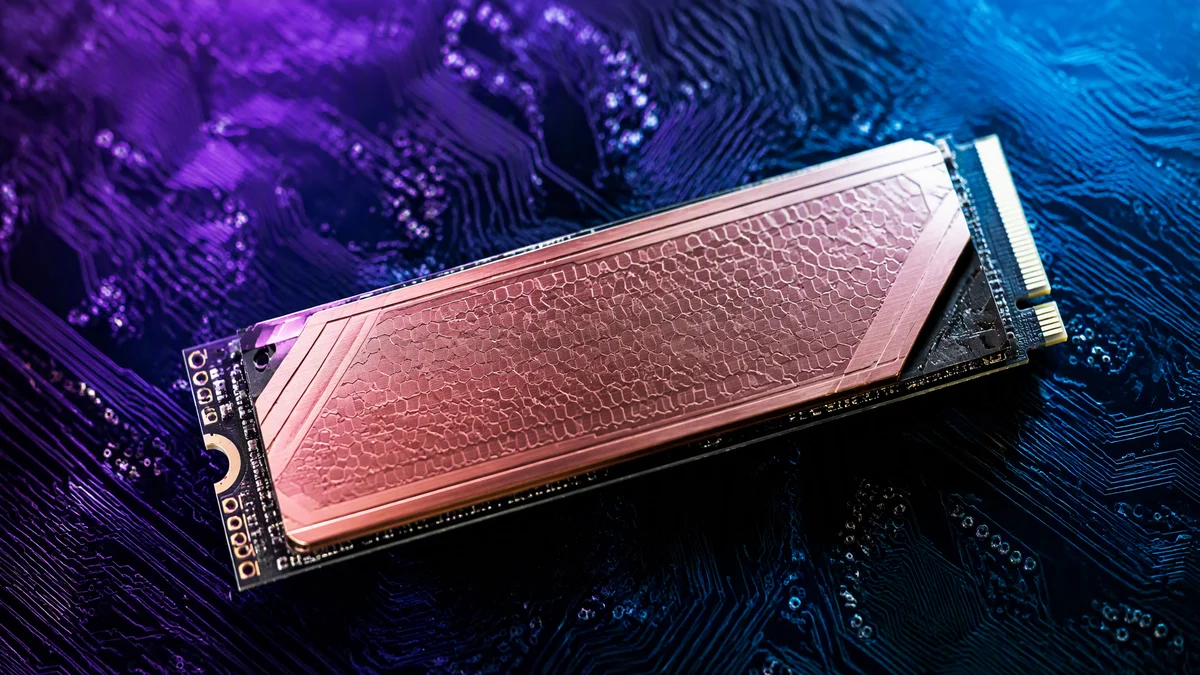
SK hynix spent years being the best-kept secret in storage: the company that made the NAND inside everyone else’s fastest drives, while its own retail SSDs quietly topped efficiency charts. The Platinum P51 ends the quiet part. This is a no-compromise PCIe Gen5 flagship rated at 14,700 MB/s, and in our testing it delivers some of the best real-world gaming performance we have ever recorded.
Key Takeaways
- Sequential reads up to 14,700 MB/s put it in the top tier of Gen5 drives.
- Random performance translates into class-leading game load and level-streaming speed.
- SK hynix’s own controller and TLC flash, a fully vertical design from a memory giant.
- Competitive pricing makes it a genuine alternative to the usual Samsung and Phison-based suspects.
The vertical integration advantage
There are only a handful of companies on Earth that can design an SSD controller, fabricate the NAND it talks to, and tune the firmware that marries them. SK hynix is one of them, and the P51 shows what that buys you. The controller is not an off-the-shelf part shared with a dozen rivals; it is silicon designed around this exact flash, with firmware written by the people who built both. The result is the kind of consistency that spec sheets cannot capture: latency that stays low across the whole drive, and performance that does not fall apart when the drive is half full.
That last point deserves emphasis. Many fast drives benchmark beautifully when empty and fresh, then sag as they fill. The P51’s steady behavior at high fill levels is one of its quiet strengths, and it is a direct consequence of that vertical integration.
Specs at a glance
| Specification | SK hynix Platinum P51 2TB |
|---|---|
| Form factor | M.2 2280 |
| Interface | PCIe 5.0 x4, NVMe |
| Sequential read | Up to 14,700 MB/s |
| Controller | SK hynix in-house Gen5 design |
| NAND | SK hynix TLC 3D NAND |
| DRAM | Dedicated LPDDR4 cache |
| Capacities | 1TB / 2TB (tested) and up |
| Warranty | 5 years limited |
Benchmarks and real world performance
- Sequential throughput at the rated 14,700 MB/s, within a rounding error of the interface ceiling.
- Game loading and DirectStorage-style streaming workloads at or near the top of our all-time charts.
- Strong performance retention at 50 and 75 percent fill, where lesser drives start to fade.
- Thermals that stay civilized under a standard motherboard heatsink.
Games are where the P51 earns its name. Level loads in our test suite land within a frame or two of the fastest drive we have ever benched, and open-world streaming, the workload that actually stresses an SSD mid-game, is flawless. Paired with a fast GPU like the one in our ROG Strix RTX 5070 Ti review, texture pop-in simply stops being a topic of conversation.
Thermals and everyday behavior
Gen5 drives have a reputation for running hot enough to need comedy heatsinks, and the first wave earned it. The P51 is part of the grown-up second generation: it warms up under sustained load, as physics demands, but with a basic motherboard heatsink it never throttled in our testing, and in bursty real-world use it barely gets warm. In a PlayStation 5 or a laptop with any heat-spreading provision at all, it behaves impeccably.
How it stacks up
The Gen5 flagship tier is crowded now, and that is great news for buyers. Samsung’s 9100 PRO, which we review in our 1TB lab champion coverage, trades blows with the P51 on sequential speed, while a wave of Silicon Motion and Phison-based drives from other brands undercuts both on price. Where the P51 carves its niche is the complete package: elite speed, elite consistency, a first-party design from a company that makes its own flash, and pricing that regularly undercuts the biggest name in the category.
If you are shopping the very top of the market, the honest answer is that you cannot buy a bad drive anymore. But you can buy a smarter one, and the P51 makes a strong case that it is exactly that.
The verdict
From OEM secret to retail force
If the SK hynix name is unfamiliar in the SSD aisle, that is a retail accident rather than a capability gap. The company’s drives have topped efficiency and performance charts for years under its own Platinum badge, and its NAND sits inside devices from the biggest names in tech. What has changed is distribution: the P51 is stocked like a mainstream flagship, priced to compete, and supported by a proper consumer warranty rather than buried in an OEM catalog.
Console gamers should take note too. In a PlayStation 5 expansion slot the P51 exceeds Sony’s speed requirements by a wide margin and behaves impeccably under the console’s thermal constraints, making it one of the strongest PS5 upgrades we have tested this generation.
Pricing will decide how high this drive climbs on our leaderboard, and early street prices are encouraging. If SK hynix keeps the P51 below the biggest-name rival while matching its speed, the recommendation writes itself. Either way, the Gen5 flagship tier just gained a serious new contender, and buyers are the winners.
Full product details are on SK hynix’s official storage pages.
A flagship without the flag-planting price
What we loved
- 14,700 MB/s sequential speed with best-in-class gaming performance
- Fully in-house controller, flash and firmware
- Consistency holds up as the drive fills
- Sensible thermals with a basic heatsink
What needs work
- Brand awareness still trails the biggest retail names
- Peak writes trail the largest-capacity rivals slightly
- Software utility is functional rather than luxurious
The Platinum P51 is the drive we would hand a friend who wants the best and does not want to overthink it. It is fast everywhere, consistent everywhere, and priced like it wants your business. The Gen5 throne is contested; the P51 is one of the strongest claims to it. See our testing process on the review methodology page.
Building a new Gen5 rig? Ask the team which drive fits your board and budget.

Alex Mercer is the managing editor of Tech News Xplore. A hardware journalist for over a decade, he has benchmarked more CPUs, GPUs and handhelds than he can count, and leads the publication's testing methodology and editorial standards.
1 reader comment