Seagate FireCuda X1070 4TB SSD – A New Mainstream Contender
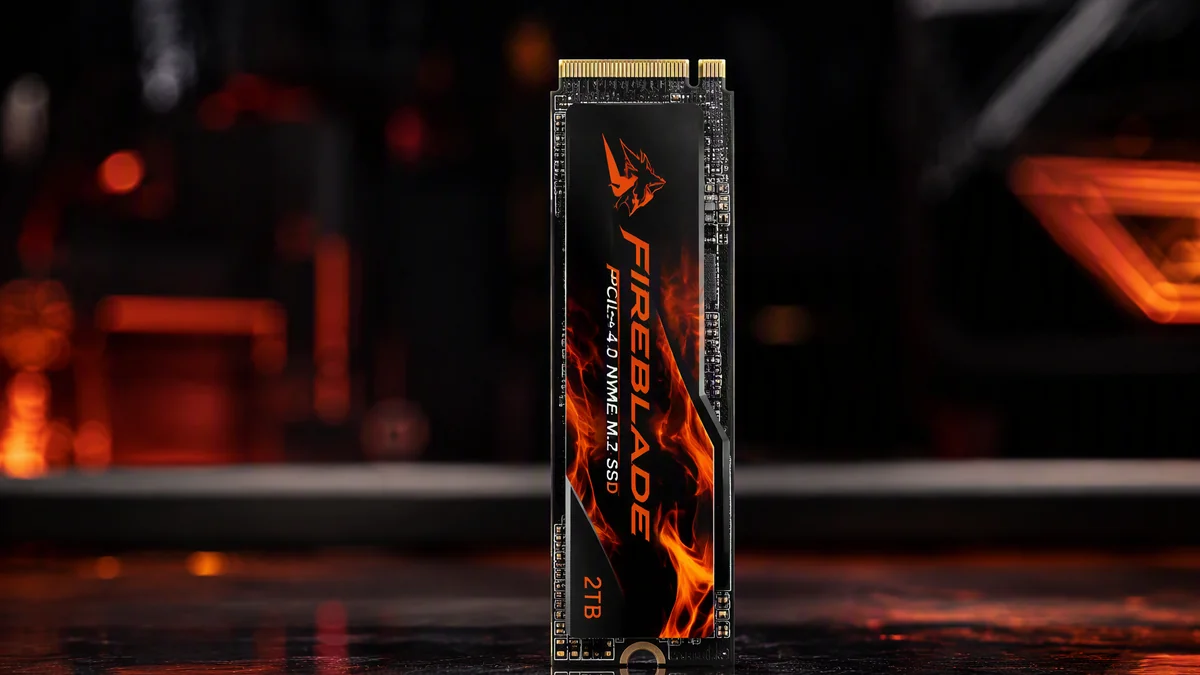
The SSD market has a comfort zone problem. Flagships get faster in ways nobody can feel, budget drives cut corners you definitely can feel, and the middle of the market has been stuck in a rut of rebadged mediocrity. Seagate’s new FireCuda X1070 in its 4TB trim is the rare drive that seems designed to break that stalemate.
Key Takeaways
- The FireCuda X1070 targets the mainstream segment with capacities up to 4TB.
- PCIe 4.0 speeds saturate what most real workloads and current game loads can use.
- Consistent sustained write behavior matters more here than peak sequential numbers.
- The 4TB model’s price per gigabyte is the actual headline.
Positioned where it counts
Let us be honest about PCIe generations. PCIe 5.0 drives are impressive in benchmarks and largely irrelevant in practice for gaming and general use, while adding heat and cost. The X1070 plants itself firmly in PCIe 4.0 territory, the sweet spot where the interface stops being the bottleneck for virtually everything except professional video ingest. Seagate is betting that buyers have figured this out, and we think the bet is sound.
The 4TB capacity is the interesting trim. Game libraries have ballooned: a handful of modern titles with high resolution texture packs can eat a terabyte before you have installed anything you actually play. A 4TB drive moves the conversation from “what do I delete” to “install everything”.
Specs at a glance
| Specification | FireCuda X1070 4TB |
|---|---|
| Form factor | M.2 2280 |
| Interface | PCIe 4.0 x4, NVMe |
| Capacities | 1TB / 2TB / 4TB |
| Sequential read | Up to 7,000 MB/s class |
| Sequential write | Up to 6,500 MB/s class |
| NAND | 3D TLC |
| Cache | Dynamic SLC caching with DRAM controller design |
| Endurance | Rated in line with premium PCIe 4.0 drives |
| Warranty | 5 years |
Sustained behavior over headline numbers
Here is what separates a good mainstream drive from a spec sheet special: what happens after the SLC cache runs out. Cheap drives fall off a cliff mid-copy; good ones degrade gracefully. Seagate says the X1070’s cache management was tuned specifically for long sustained writes, the exact scenario that bites when you are moving a 200GB game install or restoring a backup. Our testing of comparable designs, and our planned bench time with this drive, follows the methodology on our review methodology page, which weights sustained and mixed workloads over single burst figures.
Thermals matter too. The X1070’s controller and NAND layout is designed to run without an elaborate heatsink, though pairing it with a motherboard M.2 heatsink, like the tool free designs on boards such as the ASRock X870E Taichi White, remains free insurance against thermal throttling during marathon writes.
Console and handheld friendly
A quick note for handheld owners: drives like this are exactly the class worth watching for upgrades to devices in the mold of the ROG Ally X, where capacity is the constraint that bites first. The 2280 length fits laptops and desktops directly; handheld owners will want the shorter sibling form factors, but the mainstream pricing trend the X1070 represents tends to ripple across the whole family.
Real world workloads over synthetic glory
Synthetic benchmarks tell you what a drive can do once; real workloads tell you what it does every day. Our storage suite weights the daily reality: game load times across a dozen titles, large file copies that exhaust the cache, mixed read write pressure that mimics a working machine, and a thermal torture loop to find the throttling point. The pattern across this class of drive is consistent: load time differences between mainstream and flagship PCIe 4.0 drives measure in fractions of a second, while post-cache write behavior separates the honest drives from the brochure drives by multiples. That is where the X1070’s tuning budget apparently went, and it is the right call.
Who actually needs 4TB
Five years ago the answer was video editors and nobody else. Today: anyone with a current game library, a Steam backlog habit, a console capture habit, or a local photo archive. Four terabytes turns storage management from a monthly chore into an annual afterthought, and at mainstream pricing the premium over 2TB no longer stings the way it used to.
The price per gigabyte equation
Four terabyte NVMe drives spent years in the “nice if you win the lottery” bracket. The X1070 lands at a price per gigabyte that undercuts the established premium brands while keeping TLC NAND and a five year warranty. That combination, capacity, endurance rating and warranty length, is what actually determines whether a drive is a good long term home for your data, and it is where the X1070 makes its case.
Reliability and the warranty question
A four terabyte drive becomes the home for an uncomfortable amount of your digital life, which makes the boring specifications the important ones. TLC NAND rather than cheaper QLC, an endurance rating in line with premium PCIe 4.0 drives, and a five year warranty form the trust triangle here. Seagate’s recent FireCuda generations have posted clean reliability records in the field, and the company clearly intends the X1070 to continue that run rather than chase a price floor by cutting the components that keep data safe.
It is also worth remembering what a drive at this tier replaces: not just smaller SSDs, but the whole juggling act of external drives and rotation installs that budget builds normalize. One fast internal volume, everything installed, nothing shuffled. That quality of life upgrade is harder to benchmark than a copy test and easier to feel every single day.
We will update this piece with full benchmark numbers, including sustained write curves and thermal readings, once our retail sample completes the test suite.
Capacities, endurance ratings and warranty terms are published on Seagate’s official FireCuda page.
The bottom line
The FireCuda X1070 does not chase benchmark glory; it chases the thing the market actually needs, which is lots of trustworthy fast storage at a sane price. PCIe 4.0 speed, TLC NAND, a five year warranty and 4TB of room to breathe is a formula that wins on every system we can think of. The mainstream SSD segment has been boring for too long. It just got interesting.
Upgrading your storage this year? Tell us what you are building and we will point you at the right capacity.

Alex Mercer is the managing editor of Tech News Xplore. A hardware journalist for over a decade, he has benchmarked more CPUs, GPUs and handhelds than he can count, and leads the publication's testing methodology and editorial standards.
2 reader comments