Apple Watch Series 12 and Ultra 4 Go All-In on Health Sensing and Audio Intelligence
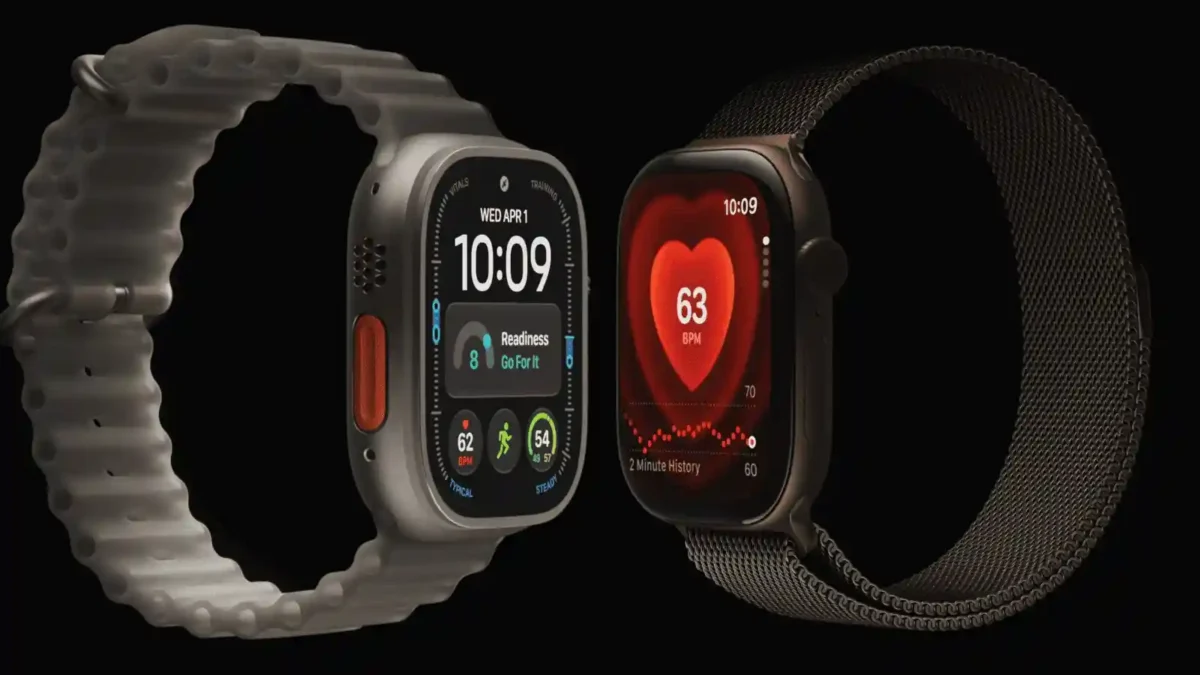
Apple isn’t trying to reinvent the Apple Watch with a radically different shape this year. Instead, it’s making the device on your wrist substantially better at understanding what your body and even the world around you is doing.
The new Apple Watch Series 12 and Apple Watch Ultra 4 introduce Apple’s S11 chip, a redesigned health-sensing system, much more frequent heart-rate measurements and a new Readiness score designed to tell you whether today is a day to push harder or dial things back.
Then things get more unusual.
Apple is also bringing a collection of features called Audio Intelligence to its latest watches, including sound recognition, automatic music identification and AI-powered tools that can help users recall parts of conversations.
That’s a much bigger shift than another yearly spec bump. Apple is slowly turning its smartwatch from something that simply records data into a device that tries to interpret what’s happening around you.
Key Takeaways
- Apple Watch Series 12 introduces the new S11 chip and Health Sensing System.
- Heart rate can now be measured in the background as frequently as every five seconds.
- A new Readiness score from 0 to 10 evaluates activity, training load, sleep and physiological data.
- Audio Intelligence introduces Live Rewind, Siri Recap, Sound Recognition and improved Shazam integration.
- Series 12 starts at $399, while Apple Watch Ultra 4 starts at $799, with availability beginning September 18, 2026.
Apple Is Measuring Your Heart Much More Frequently
The biggest upgrade may be invisible.
Apple has redesigned the heart-sensing hardware in both watches. On the Series 12, larger and more power-efficient green LEDs allow the optical sensor to measure heart rate every five seconds throughout the day.
That’s important because wearable health tracking isn’t just about collecting one accurate measurement. More frequent sampling can provide a much richer picture of how your body changes throughout the day.
Apple says heart-rate variability, or HRV, is also measured significantly more often. HRV tracks variation in the timing between heartbeats and can provide useful context around stress and recovery.
Apple Watch now separates recovery HRV from broader HRV measurements, while the Vitals experience can compare results with a user’s personal baseline.
Apple claims its new sensing system provides the most accurate heart-rate measurement available in a wearable. The company says it tested the technology in a study involving more than 1,000 participants.
That’s Apple’s claim, however, and independent testing will ultimately tell us how the Series 12 and Ultra 4 compare with competing fitness watches in everyday conditions.
Readiness Turns Health Data Into Something Easier to Understand
Collecting more health data is useful. Understanding what to do with it is another matter entirely.
That’s where Apple’s new Readiness feature comes in.
Rather than throwing another collection of charts at users, Readiness combines factors including recent activity, training load, sleep and physiological measurements into a score between 0 and 10.
The watch then translates that number into simpler recommendations such as Recover, Pace Yourself, Ready or Go For It.
Better still, the score isn’t frozen when you wake up. Apple says Readiness can update throughout the day as new information arrives.
Imagine finishing a much harder workout than planned. Instead of waiting until tomorrow morning, your watch could potentially adjust its interpretation of your recovery needs later that same day.
That’s where Apple Watch starts feeling less like a passive fitness tracker and more like a coaching platform.
Audio Intelligence Is the More Surprising Upgrade
Health sensors were expected. A watch that can help you remember conversations? That’s considerably more interesting.
Apple’s new Audio Intelligence system introduces four major capabilities: Sound Recognition, Live Rewind, Siri Recap and enhanced Shazam functionality.
Sound Recognition can identify important noises such as alarms, sirens, doorbells or a baby crying and notify the wearer. Apple positions it primarily as an accessibility feature for people who are deaf or hard of hearing.
Live Rewind is more futuristic.
Double-pressing the Digital Crown can show a text representation of the previous 15 seconds of conversation, letting you recover something you didn’t hear clearly. Users can then ask Siri about that information or save it for later.
Siri Recap goes further by generating high-level summaries and key points from conversations when the feature is enabled.
That immediately creates an obvious privacy question: is an Apple Watch constantly recording everyone nearby?
According to Apple, no.
The company says Audio Intelligence does not create or store conventional audio recordings. Raw audio is processed inside a hardware-isolated section of the S11 platform and deleted after processing. Apple also says synchronized Live Rewind text and Siri Recap summaries receive end-to-end encryption.
Live Rewind and Siri Recap are scheduled to arrive in beta later in 2026. They require a compatible Apple Intelligence-enabled iPhone, initially support English and won’t initially be available in the European Union.
Series 12 vs Ultra 4: Two Very Different Apple Watches
Both watches share Apple’s new health and intelligence direction, but they’re still targeting very different buyers.
The Apple Watch Series 12 starts at $399 and maintains the thinner, everyday smartwatch approach. Apple offers 42mm and 46mm versions, while the display reaches up to 2,000 nits of brightness. Battery life is rated for up to 24 hours of normal use or 38 hours in Low Power Mode.
Apple also says aluminum Series 12 models use Ceramic Shield 2, which is 60% tougher than the Ion-X glass used on previous aluminum models. Titanium and ceramic configurations use sapphire crystal instead.
The Apple Watch Ultra 4 starts at $799 and continues to target athletes, hikers and endurance users.
It retains its 49mm titanium design and pushes display brightness to 3,000 nits. More importantly for outdoor use, Apple rates the Ultra 4 for up to 50 hours of normal use, 84 hours in Low Power Mode and as much as 45 hours in its Max Extended Workout configuration.
For someone running an ultramarathon or spending a long weekend away from a charger, that difference matters far more than another software feature.
The Apple Watch Is Becoming an Interpretation Device
The interesting part of this generation isn’t simply that Apple collects more measurements.
It’s what happens after those measurements are collected.
A heart-rate sensor telling you that your pulse is 72 beats per minute is useful. A system capable of combining heart rate, HRV, sleep and recent workouts to tell you whether your body appears ready for another demanding training session is potentially much more useful.
Audio Intelligence follows exactly the same philosophy.
The microphone already existed. Apple is now trying to make the information it captures more useful through contextual processing and AI.
That doesn’t automatically make every feature essential, and features involving conversations will inevitably face scrutiny around privacy and social acceptance.
But the direction is clear.
Apple wants the Watch to evolve from a device that records what happened into one that increasingly explains what that information means.
For more coverage of Apple’s latest hardware, AI developments and emerging consumer technology, follow TechNewsXplore.
The Apple Watch Series 12 and Ultra 4 are available for pre-order now, with retail availability beginning September 18, 2026.
Official Sources
- Apple Newsroom — Introducing Apple Watch Series 12 with the all-new Health Sensing System
- Apple Newsroom — Apple unveils Apple Watch Ultra 4
- Apple — Apple Watch Series 12 Technical Specifications
- Apple — Apple Watch Ultra 4 Technical Specifications

Alex Mercer is the managing editor of Tech News Xplore. A hardware journalist for over a decade, he has benchmarked more CPUs, GPUs and handhelds than he can count, and leads the publication's testing methodology and editorial standards.