LG unveils FLiPP, its dream next-generation OLED technology
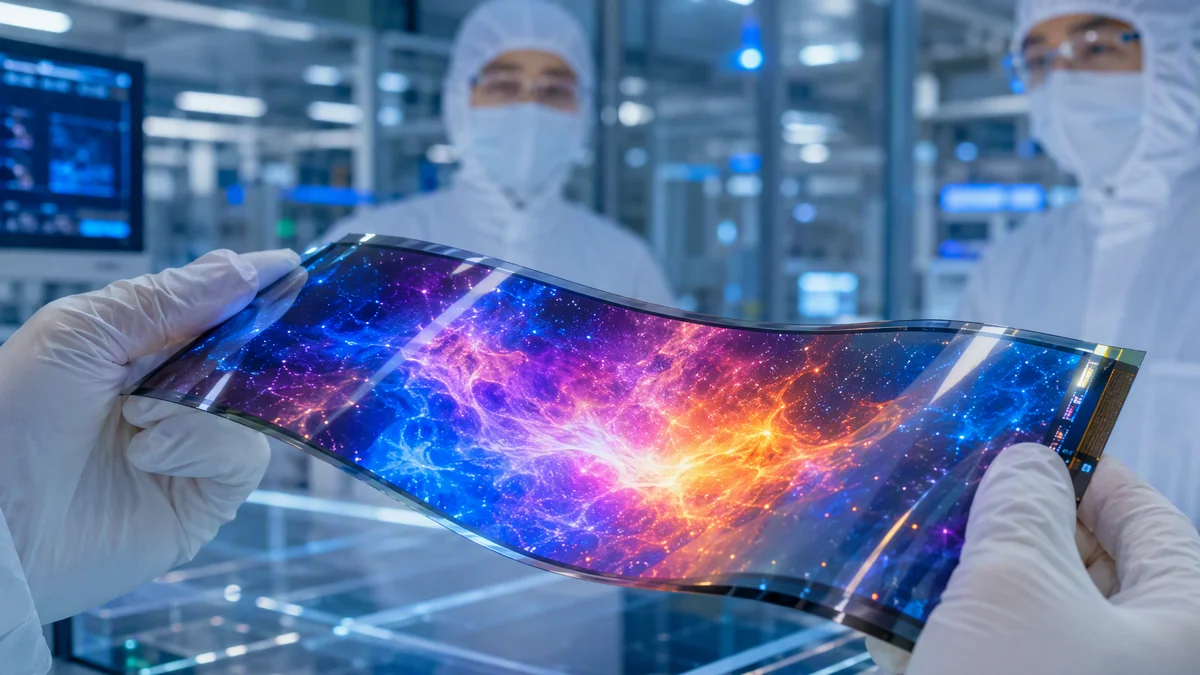
OLED has spent a decade winning every picture-quality comparison while losing the ones that matter at the register: brightness ceilings, burn-in anxiety and price. LG Display’s newly unveiled FLiPP process, which the company calls its dream next-generation OLED technology, claims to attack all three at once, at the factory level where such things are actually decided.
Key Takeaways
- FLiPP is LG Display’s new OLED manufacturing process, billed as its next-generation panel technology.
- The process targets higher brightness, improved durability and lower production costs simultaneously.
- Manufacturing-level improvements flow downstream into monitors and TVs within a few product cycles.
- The announcement intensifies the OLED production race at a moment of rapid market expansion.
Why manufacturing, not pixels, is the frontier
Consumer-facing OLED debates obsess over panel types and subpixel layouts, but the technology’s real constraints live on the production line. Deposition precision, material utilization and yield rates determine what a panel costs and how uniformly it performs. A process improvement that raises yield by a meaningful margin does more for OLED’s future than any incremental emitter tweak, because it changes what the technology can afford to be.
That is the level FLiPP claims to operate at: a reimagined manufacturing flow rather than a new marketing name for an existing stack.
The three promises
Brighter: OLED’s brightness ceiling has been its one persistent weakness against high-end LCDs with mini-LED backlights, particularly for HDR highlights in bright rooms. Process improvements that raise luminous efficiency let panels push harder without proportionally increasing wear.
More durable: burn-in risk has shrunk dramatically over recent generations through a combination of materials, compensation algorithms and usage protections, but it has never left the conversation. Durability improvements at the material and process level address the concern at its root rather than managing it in software.
More affordable: this is the promise that moves markets. OLED monitor prices have been falling steadily as production scales, and a process that cuts manufacturing cost accelerates that curve. The sub-$500 OLED gaming monitor, unthinkable three years ago, becomes ordinary if claims like these deliver.
What history teaches about OLED claims
Veteran display watchers know the drill. Panel makers announce a breakthrough process with an optimistic efficiency figure and a confident timeline. The first retail products arrive a year later with a portion of that gain intact, and the rest quietly reattributed to combined improvements across materials, driving circuits and firmware. It happened with early OLED brightness claims, with the first QD-OLED marketing, and with countless quantum dot revolutions that turned out to be evolutionary.
None of this means FLiPP is hollow. LG Display has delivered on big promises before, most notably dragging WOLED from a brightness handicap to genuine competitiveness with mini-LED backlights on spec sheets. The lesson is calibration rather than cynicism: believe the direction, discount the magnitude, and set your expectations for the second generation of any new process rather than the first.
The encouraging sign is that LG is talking about efficiency rather than peak brightness alone. Efficiency gains compound. A panel that converts more electricity into light runs cooler, ages slower, resists burn-in better, and can spend its thermal budget on brightness when content demands it. If FLiPP is genuinely an efficiency story, it matters more than a flashy nits headline would, because it reshapes the economics of every panel built on it for years.
The monitor angle for PC users
Desktop users should watch this closely. OLED gaming monitors have exploded from curiosity to category, and the remaining barriers are exactly FLiPP’s targets: full-screen brightness for productivity, static-element anxiety for taskbars and code editors, and price. A brighter, tougher, cheaper panel pipeline is precisely what turns OLED from the enthusiast default into the default, full stop. Pair that trajectory with the GPU power now available at the high end, like the card in our Strix 5070 Ti review, and the premium display upgrade path looks very different two years from now.
From factory to shelf: the realistic timeline
Manufacturing announcements come with a built-in delay that press releases omit. A new process must move from pilot lines to mass production, prove its yields at volume, then get designed into panels, then into monitors and TVs, then through certification and retail channels. Even when everything goes smoothly, that pipeline is measured in years, not quarters. The practical reading of FLiPP is not “better panels next month” but “the panels shipping in the next couple of product cycles should be built on this”, which is still genuinely exciting if you are planning a display upgrade on a two-year horizon.
There is a supply-chain subplot worth watching as well. New processes rarely debut at full capacity, so early FLiPP output will be rationed between TV and monitor lines by margin, not by merit. If monitors win early allocation, that tells you where LG sees the growth; if TVs do, expect desktop availability to lag by another cycle.
TVs versus monitors: who benefits first
Large-format TV panels and desktop monitor panels come from different lines with different constraints, and process improvements rarely land in both simultaneously. Watch which product family LG highlights first in FLiPP-based panels, because that choice telegraphs where the process yields best early. Monitors, with their smaller cuts and voracious gaming market, have historically been fast adopters of panel improvements once the economics work.
The race context
LG Display is not moving in a vacuum. Rival panel makers are pushing their own next-generation processes, and the competition has become a genuine technology race with capacity investments to match. Consumers simply win these races: every process breakthrough at any manufacturer pressures panel prices and raises the performance floor across the entire display market.
Panel roadmap background is published by LG Display’s official site.
The bottom line
FLiPP is a factory-floor promise, and factory-floor promises are the ones that actually reshape what you can buy. If LG Display delivers even most of the brightness, durability and cost claims, OLED’s remaining excuses disappear within a couple of product cycles. The dream technology label is marketing. The direction it points, cheaper and better OLED everywhere, is not.
Waiting to upgrade your monitor? Ask the hardware desk whether to buy now or wait for the next panel generation.

Alex Mercer is the managing editor of Tech News Xplore. A hardware journalist for over a decade, he has benchmarked more CPUs, GPUs and handhelds than he can count, and leads the publication's testing methodology and editorial standards.