Call of Duty: Modern Warfare 4’s PC Shader Compilation will run before you even launch the game
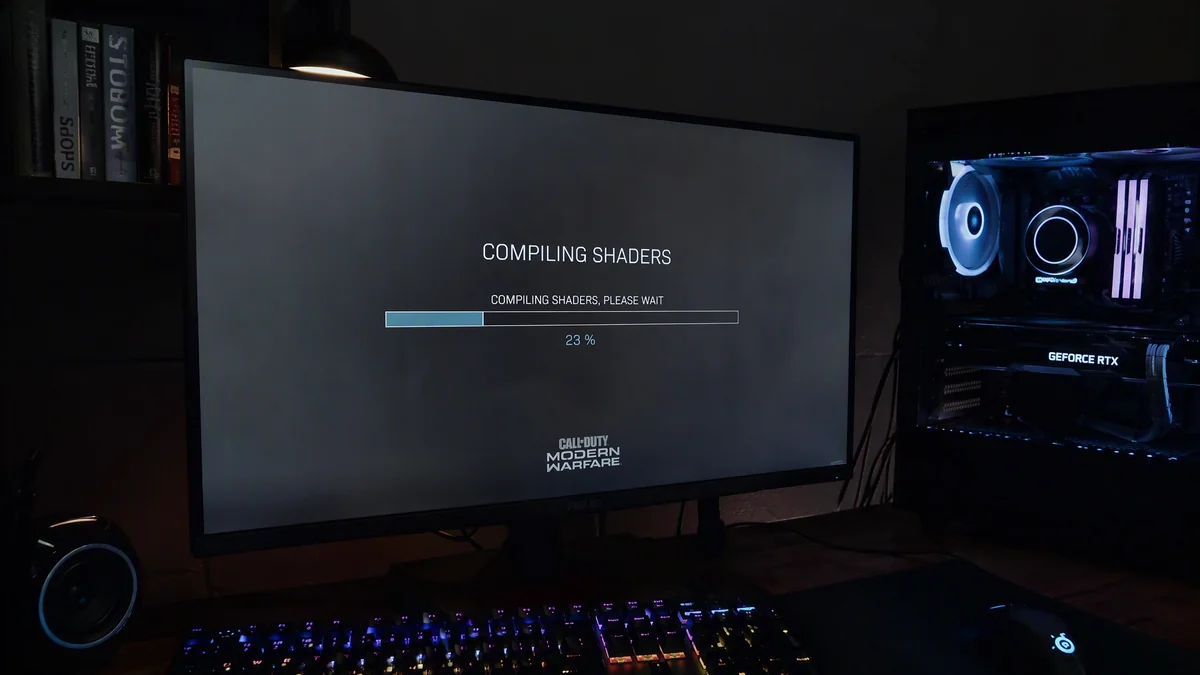
Every PC gamer knows the ritual: new game, first launch, and ten minutes of hitching while the engine compiles shaders you never asked to see. Modern Warfare 4 is finally attacking the problem where it lives. Activision’s new approach compiles shaders before you even launch the game, and if it works as described, the stutter era of Call of Duty on PC might actually be over.
Key Takeaways
- Modern Warfare 4 on PC will run shader compilation as a background task before launch, not during gameplay.
- The goal is eliminating traversal stutter and first-run hitching, the series’ most persistent PC complaint.
- The process reportedly integrates with launchers and can complete while you are doing something else.
- It follows an industry-wide shift toward precompiled or pre-warmed shader pipelines.
Why shaders stutter in the first place
Quick technical grounding, because the fix only makes sense with the problem. Modern games ship with shaders written in an intermediate form. Your specific GPU driver must compile those into machine code for your exact hardware before anything renders. Do that compilation lazily, on first use, and every new effect, area or weapon skin triggers a compile hitch mid-gameplay: the dreaded traversal stutter that makes a 200 fps rig feel broken.
Call of Duty has historically handled this with a “compiling shaders” progress bar after updates, then residual stutter anyway as the game hit un-cached combinations later. Players have complained about it for years with the weary persistence of a community that has reinstalled the same 200GB game too many times.
What pre-launch compilation changes
The new system moves the entire compilation workload forward in time. Shaders compile in the background, before gameplay, reportedly as a launcher-level or scheduled process rather than a blocking screen inside the game. The practical difference: instead of compiling when you want to play, the work happens when your PC is idle, updating, or doing anything else.
This mirrors the direction the wider industry has taken, from consoles pre-warming shader caches to PC engines shipping precompiled pipeline bundles for common hardware. The physics of the problem never change; only when you pay the cost does.
How pre-launch compilation actually works
Under the hood, systems like this enumerate the shader permutations the game needs, compile them against your installed driver, and store the results in a cache the game consults at runtime. Move that work to a pre-launch window and the runtime path becomes simple: look up, hit the cache, render without a hitch. The engineering challenges are in the margins: permutations that only appear under specific settings changes, cache invalidation when drivers or game builds update, and scheduling the compile so it never competes with anything the user cares about. Solvable problems, all of them, but they explain why the industry took this long to get here despite the problem being understood for a decade.
The fine print we will be testing
Details that matter and remain unclear: how long a full compilation takes on a midrange CPU, whether compilation state survives driver updates (historically a cache-buster that forces recompiles), how much disk the cache consumes, and whether the background process respects system load politely. A compilation task that pins all cores while you are working is just the stutter problem wearing a scheduler costume. Our review coverage, tested per our published methodology, will measure actual frame-time behavior rather than trusting the checkbox.
What players should do at launch
Practical advice for day one: install early and let the pre-launch process finish before your first session, whatever the launcher asks. Keep your GPU driver current, since driver changes historically invalidate shader caches and trigger recompiles. If you play on a laptop, plug in before the compilation runs, because background compile jobs behave very differently on battery profiles. And judge the feature by your second hour, not your first match: the whole point is that the stutter never gets a chance to start.
Console players should care too, oddly enough. Precompiled pipelines and fixed shader targets are part of why console versions of big releases have historically launched smoother than their PC counterparts. Closing that gap on PC removes one of the last structural advantages consoles held at launch day, and it raises the baseline expectation for every cross-platform release that follows.
The stutter hall of shame
Shader compilation stutter has defined more PC launches than any other single technical issue over the past five years. Reviewers have learned to wait for patches, players have learned to dread day one, and “great game, shame about the PC port” became a genre of its own. The industry’s slow pivot, from per-engine fixes to driver-level solutions to precompiled pipelines, is one of PC gaming’s quiet quality-of-life revolutions. Modern Warfare 4 joining that movement is less a feature announcement than a white flag in a war players were always going to win eventually.
Why this matters beyond one franchise
Call of Duty is not the first game to attack shader stutter, but it is the biggest. When a franchise selling tens of millions of PC copies adopts a fix, it becomes an industry expectation overnight. Engine teams watch, platform holders watch, and suddenly “does it stutter on PC” becomes a question with a reputational price attached. Modern Warfare 4 normalizing pre-launch compilation is good news for every PC player, including those who never touch the series.
It also lands in a moment when PC gaming’s hardware story is otherwise dominated by pricing anxiety, from GPU tiers to the AI-inflated memory costs hitting upcoming consoles. A free performance improvement that costs players nothing but disk space is a rare unqualified win.
Official announcements land first on the official Call of Duty site.
The bottom line
Shader compilation before launch is the fix PC Call of Duty players have demanded for years: pay the compile cost when you are not playing, so the game runs clean when you are. If the implementation respects your system and survives driver updates, the stutter era ends here. And if a franchise this size makes it standard, every other PC release just lost its favorite excuse.
Still fighting shader stutter in other games? Tell the PC gaming desk which titles need this treatment next.

Alex Mercer is the managing editor of Tech News Xplore. A hardware journalist for over a decade, he has benchmarked more CPUs, GPUs and handhelds than he can count, and leads the publication's testing methodology and editorial standards.