Intel Nova-Lake-S 28-core CPU with bLLC reportedly draws 296W at PL2
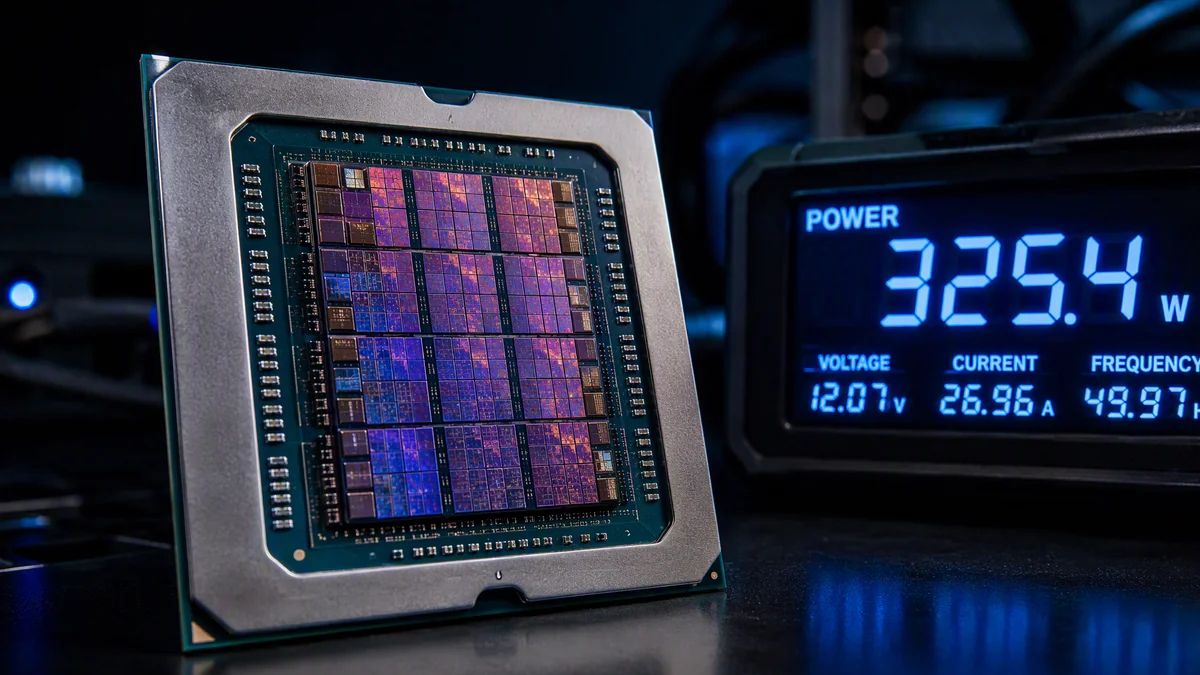
Intel’s answer to the X3D era is taking shape, and the early numbers are exactly what you would expect from a company that has decided efficiency can wait: a leak claims the Nova-Lake-S flagship packs 28 cores and pulls 296 watts at its PL2 limit. Somewhere, a cooler engineer just felt a disturbance.
Key Takeaways
- The leaked Nova-Lake-S flagship reportedly combines 28 cores with a 296W PL2 power limit.
- A bLLC variant (big Last Level Cache) is Intel’s direct answer to AMD’s 3D V-Cache strategy.
- The architecture marks a major desktop reset after the Arrow Lake generation.
- Nothing is official; treat all figures as pre-silicon rumor until Intel confirms.
What the leak claims
The reported configuration pairs a high core count, split between performance and efficiency cores in Intel’s now-standard hybrid arrangement, with an enlarged last-level cache on the bLLC variant. The cache is the headline for gamers: AMD’s X3D chips have demonstrated for three generations that a fat L3 pool is the single most effective gaming performance lever in modern CPUs, and Intel has conspicuously lacked an answer. bLLC is reportedly that answer.
The 296W PL2 figure is the headline for everyone else. PL2 represents the turbo power ceiling, the wattage the chip may draw during boost windows, and 296W continues Intel’s trajectory of chasing performance through power when the architecture needs it.
Why the cache war matters more than the core count
Core counts stopped deciding gaming performance years ago. What decides it now, at the high end, is how fast the chip feeds its cores, which is why our Ryzen 7 9850X3D review found an 8-core chip outgaming everything with more. If Nova Lake’s bLLC variant delivers a genuinely large, low-latency last-level cache with competent scheduling, Intel re-enters the gaming crown conversation it has watched from the stands lately.
The 28-core layout, meanwhile, is aimed at the productivity crown and the spec sheet: heavily threaded rendering, compilation and simulation workloads where parallel width still rules.
The process and packaging story
Behind the core count sits the part of the leak enthusiasts should weight most heavily: Nova Lake is expected to lean on advanced process nodes and a tile-based design, with compute, graphics and I/O chiplets stitched together by Intel’s packaging technology. That approach changes everything from thermals to yields to how the big cache connects. It also explains the generation’s importance to Intel beyond benchmarks: this is the desktop proving ground for the company’s manufacturing roadmap, the moment where its foundry ambitions and its product line stop being separate stories. A strong Nova Lake validates both; a weak one dents the entire strategy.
The 296W reality check
Two hundred ninety-six watts is a serious thermal budget. Sustained loads at that level demand a top-tier 360mm liquid cooler or one of the best dual-tower air coolers ever made, a motherboard VRM with real headroom, like the overbuilt designs we covered in our X870E Taichi White look, and a case with honest airflow. The counterargument from efficiency-minded builders is equally serious: rival flagships deliver near-comparable performance at half the package power, and watts become heat, noise and electricity bills.
The scheduling challenge nobody talks about
Twenty-eight hybrid cores create a problem spec sheets never mention: getting the right thread onto the right core at the right microsecond. Intel’s hybrid scheduling has improved each generation, but the gap between “works” and “optimal” shows up precisely where enthusiasts look, in frame-time consistency and latency-sensitive workloads. A big-cache variant adds another wrinkle, since cache-aware scheduling suddenly matters for gaming the way it has long mattered for servers. The silicon may be formidable; the software stack deciding how it gets used will determine whether benchmarks reflect it.
Why Intel needs this one to land
Context matters as much as silicon here. Intel’s recent desktop generations have lived under a cloud: stability controversies that required microcode rescues, efficiency curves that embarrassed the flagship tier, and a gaming market that AMD’s cache-stacked chips have quietly claimed as home turf. Nova Lake is not just another launch in that story; it is the launch that either closes the chapter or extends it. A 28-core flagship that hits its marks restores the enthusiast narrative Intel has been missing. One that stumbles hands AMD another uncontested generation, and the market share math that comes with it.
The competitive pressure cuts both ways, though. AMD will not stand still, and whatever succeeds the 9950X3D2 will arrive with its own cache and efficiency story. For buyers, that is the best possible setup: two vendors with something to prove, trading blows at the top of the stack.
What to watch between now and launch
The milestones that will confirm or kill the hype: official architecture disclosure, where cache sizes and core configurations stop being rumor; motherboard partner roadmaps, which leak socket and power delivery realities early; and any developer-facing guidance about scheduling or cache behavior, which signals how confident Intel is in the platform. Until those arrive, every figure in this story, 28 cores, bLLC, 296W, stays in the rumor column where it belongs, however plausible the sourcing.
Platform and timing questions
Nova Lake is expected to bring a new socket, which means the upgrade path question resets again: new motherboard, likely new memory tuning realities, and the usual early-adopter tax. The leaks so far point to a launch window still well over the horizon, so every number here, core counts, cache sizes, power limits, should be filed under “subject to change” rather than “spec sheet”.
What is not subject to change is the strategic picture. Intel has watched cache-stacked rivals claim the gaming narrative and efficiency rivals claim the server narrative. Nova Lake is the generation where the company has to answer at least one of those decisively, and the bLLC variant suggests it has chosen gaming.
Confirmed details will eventually appear on Intel’s official website.
The bottom line
A 28-core Nova Lake flagship with a big-cache gaming variant and a 296W appetite is Intel declaring it will not concede the desktop crown without a fight. The cache strategy is the right lesson learned from the X3D era; the power budget is the wrong lesson kept. If the silicon delivers, the next CPU wars will be genuinely competitive again, and your cooler had better be ready.
Team blue or team red for your next build? Argue it with the hardware desk.

Alex Mercer is the managing editor of Tech News Xplore. A hardware journalist for over a decade, he has benchmarked more CPUs, GPUs and handhelds than he can count, and leads the publication's testing methodology and editorial standards.
2 reader comments